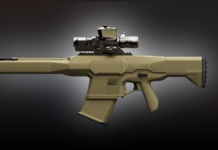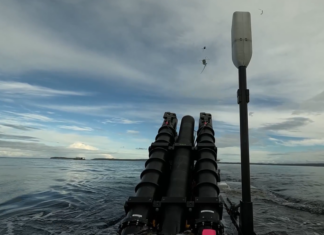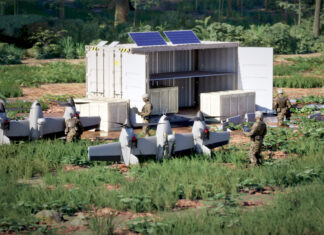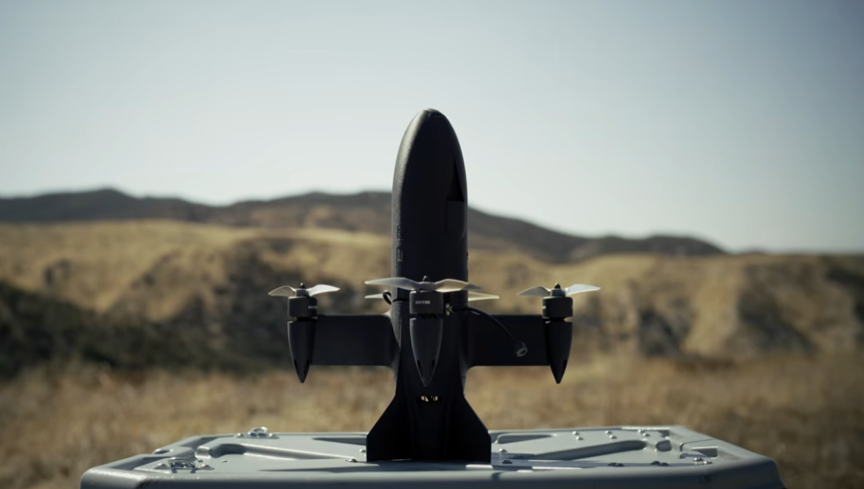
South Carolina-based defense startup Powerus unveiled its fully autonomous Guardian 3 drone interceptor at the Association of the United States Army’s annual meeting, marking its latest advance in counter-drone technology. According to co-founder and president Brett Velicovich, the company has progressed from the manually controlled Guardian 1 to the semi-autonomous Guardian 2 and now the Guardian 3, which uses radar cueing, artificial intelligence, and navigation systems to detect and engage incoming drones with less human intervention.
Powerus’s development comes amid growing U.S. military demand for affordable air defense, as the conflict with Iran has strained supplies of expensive missile-defense interceptors. Drawing lessons from Ukraine’s battlefield experience, the company aims to deliver scalable systems that require fewer specialized operators and reduce human error.
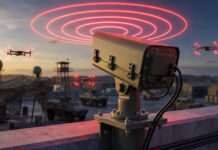
Guardian 3 is compatible with just about any radar in the U.S. military inventory.
The radar reads the incoming drone’s speed and altitude.
The system launches into that trajectory, leads the target, and finishes with a point or proximity detonation.
Brett Velicovich walks through it here.
— Powerus (@powerus_usa) October 23, 2026
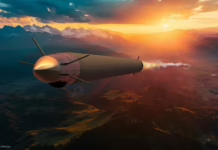
The company is also partnering with Netherlands-based defense firm Destinus to bring missile-interceptor systems to the U.S. market, expanding beyond drone defense to address broader Pentagon demand for lower-cost air defense solutions.
This demand reflects the growing challenge posed by increasingly advanced attack drones in Ukraine, where Russia’s faster, jet-powered models have reduced interception rates to just over 50%, compared with around 90% for slower, propeller-driven drones, according to the Atlantic Council. Their greater speed and improved guidance make them harder and more expensive to stop, while sustained attacks on Ukrainian cities continue to damage civilian infrastructure and disrupt daily life.
Ukraine currently relies partly on fighter jets and costly missiles to intercept these drones, creating an urgent need for more affordable alternatives. With Russia planning to expand production and move manufacturing underground, autonomous systems such as Powerus’s Guardian 3 highlight the broader push to develop scalable, cost-effective defenses against evolving aerial threats.