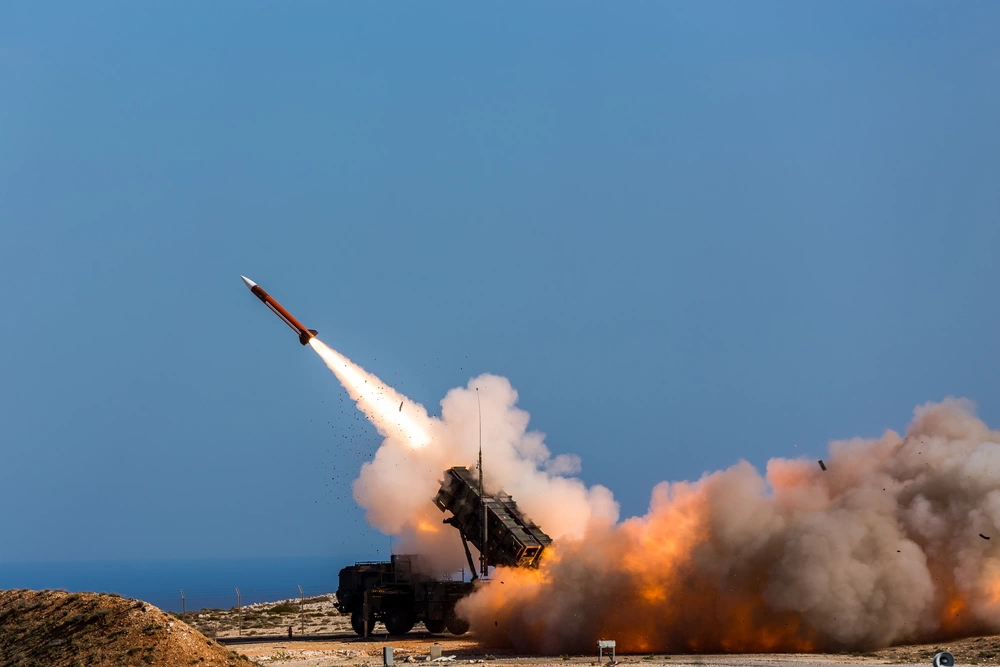
Russia has adapted the flight profiles of its Iskander ballistic missiles to exploit radar and engagement “blind spots” in the US-made Patriot PAC-3 system, reducing interception effectiveness over Ukraine, according to Wes O’Donnell of Medium. Instead of upgrading missile hardware, Russian forces are adjusting launch angles, trajectories, and timing to bypass Patriot’s fixed radar geometry. Combined with Ukraine’s limited Patriot batteries, interceptors, and radar gaps, this has given Russia a significant edge, with Ukraine’s interception rate reportedly dropping from 34 percent to 6 percent in September of 2025. In contrast, the Franco-Italian SAMP/T NG air-defense system—with its 360-degree coverage and flexible sensor integration—has performed better under the same conditions. The situation underscores a broader lesson: modern air-defense success increasingly depends on system architecture, sensor coverage, integration, and adaptability—not just interceptor performance. O’Donnell writes:
According to Defense Express, Russia studied the Patriot system’s radar geometry very closely. The AN/MPQ-53 radar used in many Patriot batteries has a search sector of roughly 90° and a tracking sector of about 120°.
Those figures create “dead zones;” angles and paths where the radar either cannot search or cannot track effectively. Over more than two years of engagement in Ukraine, Russia reportedly mapped these zones and adjusted Iskander trajectories to fly via those blind spots.
In response, the US Army plans to modernize the Patriot system with new interceptors and launchers that enable “over-the-shoulder” engagements, allowing the system to target threats that have already passed overhead without reorienting launchers. These improvements, supported by software upgrades, more vertical-launch designs such as the Common Autonomous Multi-Domain Launcher (CAML), and new 360-degree LTAMDS radars integrated via the Integrated Battle Command System, aim to close critical gaps in coverage, reported Joseph Trevithick of The War Zone. Together, these upgrades will give Patriot greater flexibility against maneuvering missiles, multi-axis attacks, and the growing operational demands placed on the system globally. Trevithick writes:
A combination of new interceptors and launchers is set to give the Patriot surface-to-air missile system an “over-the-shoulder” engagement capability, the U.S. Army has disclosed. What this means is that future Patriot systems will have critical additional flexibility to engage threats, even ones that may have already passed overhead. This is something the system cannot currently do without physically reorienting its launchers, creating challenges in various intercept scenarios. […]
“It’s a software problem. On this system right now, the software does not allow us to fire behind,” Army Brig. Gen. Patrick Costello, head of the Fires Center of Excellence at Fort Sill, who was also present during Hegseth’s tour of Redstone, added. “The Common Autonomous Multi-Domain Launcher [CAML] that we’re developing … is going to be more vertical [in terms of launch profile], too.”
“Even if we’re doing over-the-shoulder launches, we lose some probability [of kill], we lose some lethality … [when the] missile’s wasting energy going forward and turning around,” Costello continued. […]
It is also interesting to note here that many surface-to-air missile systems in service globally, including ones that are loosely comparable to Patriot, such as Russia’s S-400 and China’s HQ-9, already feature launchers that fire their interceptors vertically. […]
Earlier this year, the U.S. military notably confirmed that “Russian tactical improvements, including enhancements that enable their missiles to change trajectory and perform maneuvers rather than flying in a traditional ballistic trajectory,” had created real challenges for Patriot systems supplied to Ukraine. This is a prime example of the threat picture the Army is already faced with. […]
The Army is already working to expand Patriot’s ability to spot and track targets with new Lower Tier Air and Missile Defense Sensor (LTAMDS) radars that offer 360-degree coverage. This is a major improvement compared to the more limited, forward-facing field of view provided by the AN/MPQ-65. The new Integrated Battle Command System (IBCS) network also gives Patriot systems significantly greater access to offboard tracking and targeting data. In addition to the aforementioned benefits, over-the-shoulder engagement and vertical launch capabilities would be critical to get the most out of LTAMDS. […]
All this being said, it is important to point out that the Army’s Patriot force overall is highly strained. A succession of crises in recent years, together with support to Ukraine, have underscored how the service’s capacity to provide Patriot support is worryingly inadequate to meet current operational demands, let alone those of a future high-end fight. These concerns extend to stockpiles of interceptors, as well as the total number of systems available. TWZ has been calling attention to these issues for years now.
The Army, together with Raytheon (the Patriot system’s prime contractor) and Lockheed Martin (the prime contractor for the PAC-3 MSE), has been trying to take steps in recent years to reverse these trends. […]
What is clear is that the Army is now actively pursuing critical new capabilities to help prevent air and missile threats from slipping behind its Patriot batteries.
Read more here.