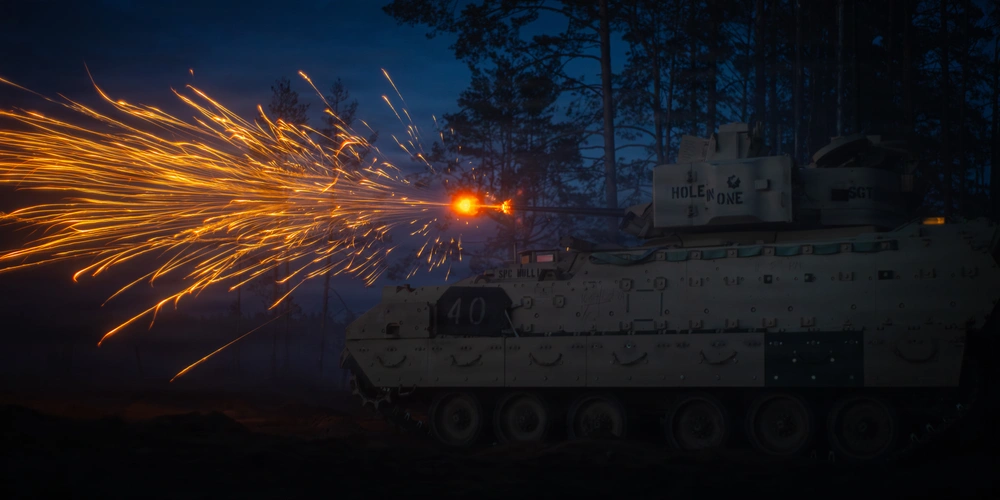
At the Pabradė Training Area in Lithuania, near the Belarusian border, U.S. and allied forces conducted Project Flytrap 5.0, a major counter-drone exercise under Saber Strike 26, reports the Department of War. Soldiers trained in an environment filled with friendly and opposing drones to learn how to operate effectively in modern three-dimensional battlefields shaped by unmanned aerial systems and electronic warfare.
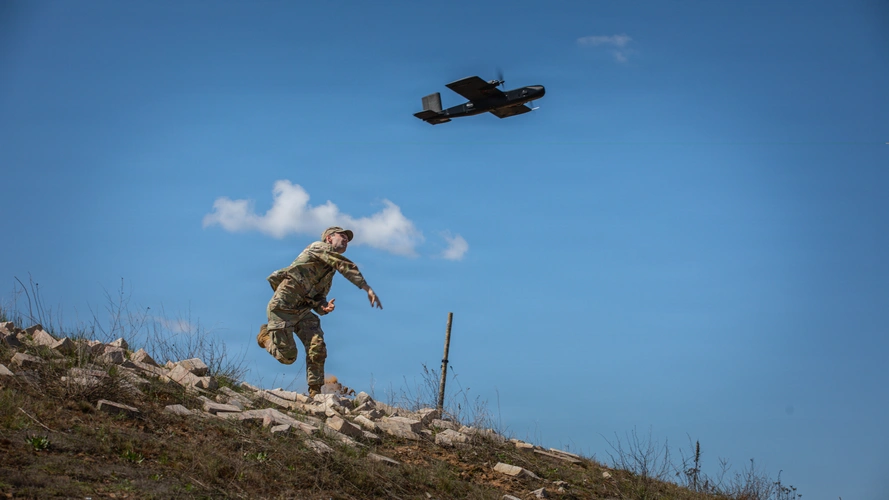
The exercise involved the US Army’s 2nd Squadron, 2nd Cavalry Regiment, the 52nd Air Defense Artillery Brigade, and the United Kingdom’s 3rd Parachute Regiment. Together, they tested more than 50 technologies provided by industry partners, including radar systems, radio-frequency jammers, kinetic interceptors, launched effects, and unmanned ground vehicles. These systems were connected through a combined U.S.-U.K. tactical network and evaluated against a live opposing force.
Project Flytrap has expanded steadily since earlier versions held in Germany and Poland during 2025. Initial exercises focused on determining which counter-drone systems worked best at small-unit levels and developing tactics for soldiers facing drone threats. Flytrap 4.5 further improved operator skills and tested newer technologies, while Flytrap 5.0 marked the first full squadron-level integration of these systems.
Military leaders emphasized that the project is designed to adapt the Army for future warfare, where low-cost drones and electronic warfare play a major role. The exercise also allows soldiers to provide direct feedback to industry developers, helping companies quickly improve equipment before it is fielded widely. Army officials noted that even failures during testing are valuable because they reveal weaknesses and lead to better solutions.
Flytrap 5.0 also supports NATO’s Eastern Flank Deterrence Initiative, which aims to improve multinational coordination, speed up battlefield decision-making through digital networks and artificial intelligence, and lower the cost of countering drones. The next phase, Flytrap 6.0, will expand the program to the brigade level, involving even larger numbers of soldiers, systems, and operational challenges.