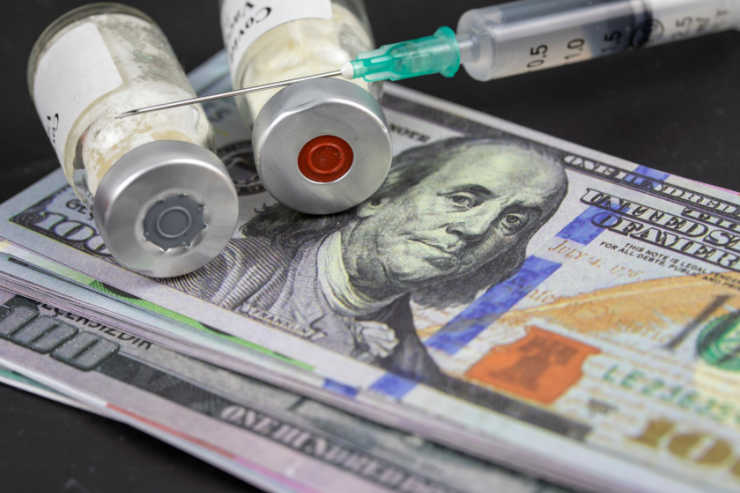
Anthony Fauci did himself no favors when he took the Fifth at his Senate hearing. Along with his diary, these may have been reputation-fuming.
As Peggy Noonan points out, every person who takes the Fifth is aware of what it looks like.
It’s the early ’60s, we’re at congressional hearings on la Cosa Nostra, and the head of one of the five families is fiddling with his diamond pinkie ring as he asserts his right not to incriminate himself.
Dr. Fauci was the one in charge of the pandemic response. “he was the face of it,” the one to lead our country through a disaster. Dr. Fauci owed the country a full, frequent, honest accounting. It was unbecoming of Fauci to dodge. Fauci tried to move quickly and avoid the truth. Joe Biden already gave Fauci a full presidential pardon.
Samuel Pepys’s Account
Ms. Noonan tells readers in the WSJ that all this made her think of Samuel Pepys, a senior government administrator for the British navy in his late 20s and 30s. His diary gave a first-hand report on two different cataclysms that hit London: The Great Fire of 1666 and the Great Plague the year before.
Ms Noonan writes,
The sweep and detail of Pepys’s diary captures the spirit of his age, the Restoration; let’s hope the flatness and self-adulation of Anthony Fauci’s doesn’t capture ours.
There were many people who tried to do many good things. Instead, it became pretty political pretty fast – insidery and groupthinky and pretty smug. The “previously obscure became famous overnight. “
“It all came together and yielded a little societal Chernobyl.”
The Cause
Who could trust the lying politicians? Nor could bureaucrats or government scientists be trusted with data in front of their eyes. The national press turned into a propaganda machine. As much as anything, warns Ms. Noonan, “Chernobyl contributed to the toppling of the Soviet Union.”
In hindsight, did Americans trust many professionals beyond what they deserved? What, asks Noonan, about politicians?
As people on the ground in America rose up against lockdowns, closed schools, mask mandates, closed churches, they were often unheard, or heard slowly, reluctantly and disrespectfully. The medical and scientific establishment didn’t seem to be a part of the public anymore, but handling the public.
A lot of people thought they couldn’t trust the politicians and couldn’t trust the scientists.
Who Will They Trust
Peggy Noonan fears that next time around—and, she writes, there will be a next time—a lot of people will believe there is no one to trust.
And that, she writes, will not be a good thing.