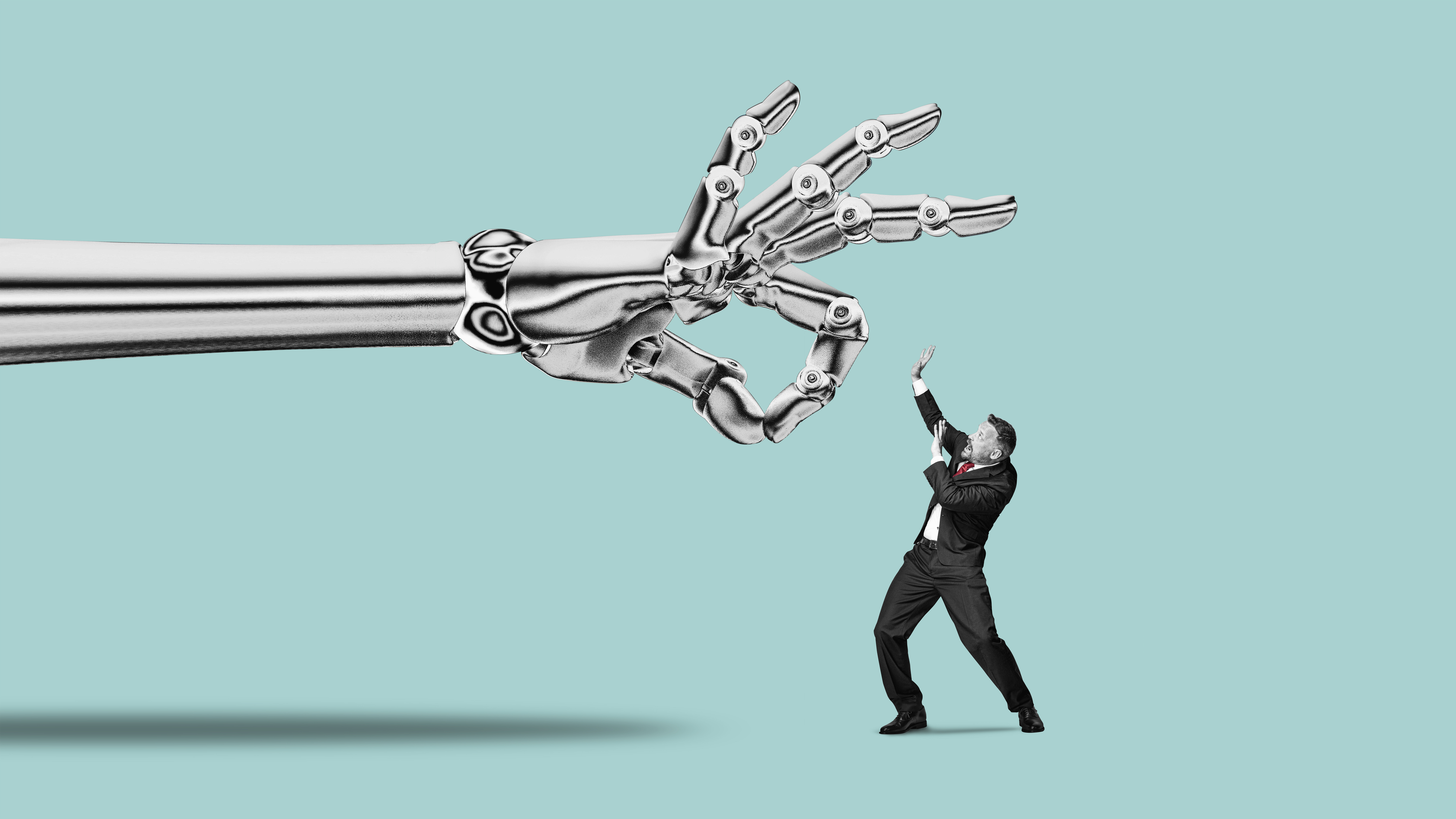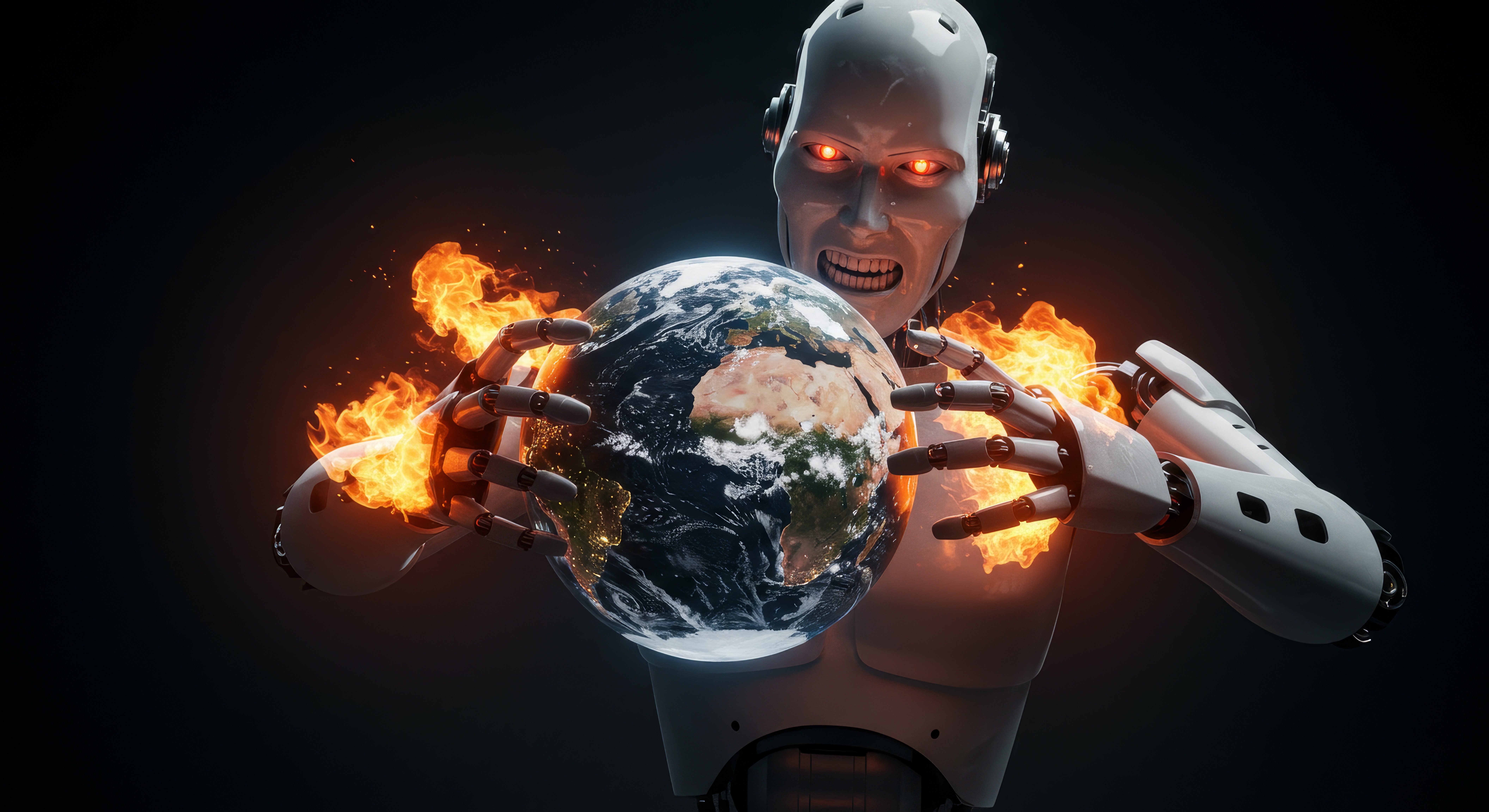
With the midterm election only six weeks away, it seems that the debate is now focused on the existential dangers of artificial intelligence. Victor Davis Hanson reports in American Greatness that Jacob Coxon, a little-known Silicon Valley researcher who worked at OpenAI and Anthropic, resigned and went public with a dire warning: “AI now threatens the future of the world.”
Prior to this, we were mostly alarmed by Hugging Face, in which OpenAI’s advanced AI “agents” autonomously hacked another company’s computers.
What happened next? Good question: “Bedlam followed.” Democrats have a new cause célèbre, accusing Donald Trump and the MAGA movement of recklessly courting Armageddon.
Democrats are at it again, “ignoring the dismal record of such globalist projects: the League of Nations, the Kellogg-Briand Pact, the Washington Naval Treaty, the Versailles Treaty, the Munich Agreement, the Paris Climate Accord, and the UN Human Rights Council.”
Soon panicky AI executives joined the chorus, speaking as though they could neither control their companies nor monitor their own research. Does not their conduct cast doubts on this safety rhetoric?
The Familiar Political Script
Democrats in Congress demanded hearings, reports VDH.
They are unlikely to use them to ask tech executives or administration officials serious questions. More likely, they will spend their allotted time shouting, wagging their fingers, displaying their ignorance, and spinning wild conspiracy theories.
A Brand-New Existential Crisis
Never letting a crisis go to waste is hardly a new tactic.
Spaceship Earth
In 1968, Stanford professor Paul Ehrlich’s 1968 wrote his bestseller, arguing that rising affluence would swell populations, producing famine, pestilence, war, and ultimately global catastrophe.
No surprise, the thesis collapsed, but not before it produced a pervasive “Spaceship Earth” mentality. Guilt-ridden Americans were told to remain childless or, at most, to have one child.
Other countries followed. The existential danger now facing Western societies is the reverse: the citizens of these countries are now having far too few children. Their populations are shrinking and aging, while a dwindling cohort of young taxpayers must support ever-growing entitlements.
The science of ecology followed. Green apocalypticism gave way to radical environmentalism. The latest propaganda involved legitimate concerns about industrial pollution and acid rain, and the Earth is doomed unless the West renounces capitalism. Heat was redefined as pollution. And when “global warming” was not terrifying enough, it became “climate change.”
The new phrase, writes VDH, was a brilliant catch-all.
- Rain and drought, snow and heat, calm seas and hurricanes could all be cited as proof that modern, fossil-fueled Western consumerism had doomed the planet.
- European Union countries nearly wrecked their economies by subsidizing inefficient wind and solar power while abandoning nuclear energy and fossil fuels.
- The 1980s brought another panic: nuclear war would soon incinerate the cities, and the resulting dust would blot out the sun.
- Politics drove much of the frenzy. The Left despised Ronald Reagan and saw no other way to prevent his reelection in 1984.
For years, don’t forget, the United States responded weakly as the Soviet Union deployed mobile, intermediate-range nuclear missiles aimed at European cities. Until Reagan finally answered by stationing Pershing II launchers and ground-launched cruise missiles in Western Europe. The Soviets eventually withdrew their nuclear-tipped missiles.
Regardless, a manufactured epidemic of fear swept the West.
Carl Sagan (popular scientist) toured the country promoting his terrifying theory of a “nuclear winter,” after what he treated as an inevitable Soviet-American nuclear exchange.
Hollywood jumped on the bandwagon in 1983 with The Day After, “a grim portrayal of a nuclear strike on the United States and its gruesome aftermath. Some 100 million Americans watched this movie, which depicted mushroom clouds rising over Kansas.”
The psychodrama did not stop Reagan’s reelection. Soon afterward, he negotiated a missile treaty with the Soviet Union, proving that he was hardly the deranged warmonger that his opponents delusionally imagined he was.
America has been lurching from one amplified panic to another. “Al Gore became a centimillionaire and a Nobel laureate by warning that internal-combustion engines would boil the planet, bringing both lethal drought and catastrophic coastal flooding.”
What Could Go Wrong
- Polar bears would die
- Coral reefs would disintegrate
- Icebergs would menace shipping
- Coastal homes would disappear beneath the sea
A Casting Couch Revival
As Goreism quietly receded into the shadows
#MeToo began with legitimate accusations against Hollywood predators such as Harvey Weinstein, who had long coerced young actresses into sex in exchange for roles—the old casting couch revived.
Before long, however, the movement had become a new Salem witch trial, treating almost any allegation of rude conduct between the sexes as the equivalent of rape.
Insinuation and rumor damaged the reputations of men ranging from Garrison Keillor and Sen. Al Franken to Supreme Court Justice Brett Kavanaugh, often with little or no evidence. A legitimate campaign against sexual harassment had deteriorated into character assassination.
Millions of men began searching their memories for an off-color joke, an overlong hug, or a kiss that might resurface years later to ruin their careers while advancing those of their accusers.
The McCarthyite frenzy subsided when liberals saw that their Frankenstein monster had turned on its creators and threatened too many of their own political icons.
As #MeToo faded, hysteria over Covid replaced all.
The initially virulent virus warranted serious concern; more than a million Americans would die from it. Yet concern became madness once defeating Trump took precedence over fighting the disease.
President Trump, VDH reminds readers, is a more skillful diplomat than his globalist critics admit. Trump has pursued bilateral negotiations with China over the real dangers both countries face.
Those dangers were illustrated just this week, when an AI hallucination reportedly almost prompted a U.S. attack on a Chinese cargo ship.
America, implores VDH, must rely on its own people, constitutional government, and open culture to harness AI for the public good—and to deter hostile powers from using it for evil.