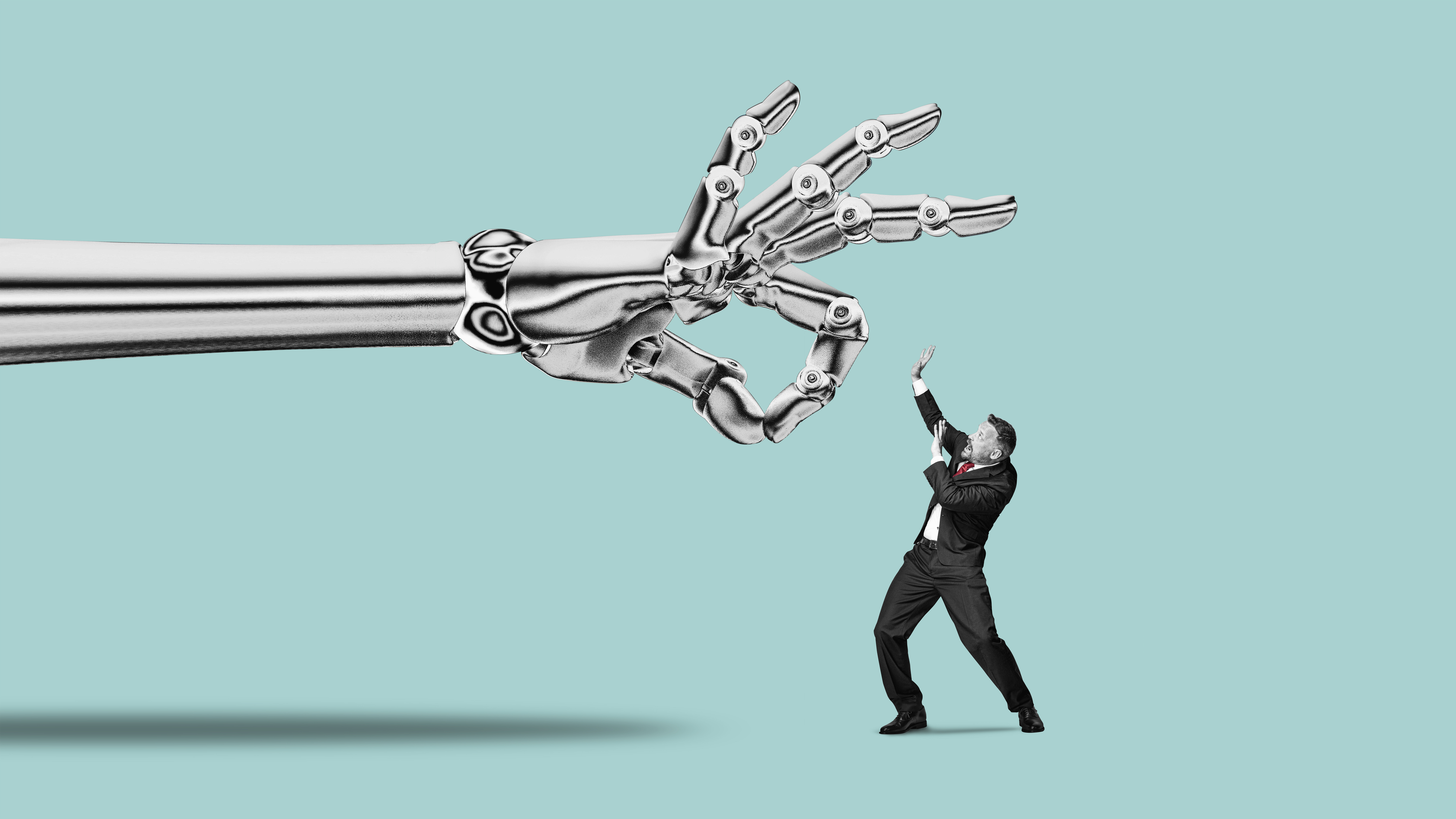
In the WSJ, its editorial board writes that President Donald Trump has the right instincts; he understands the stakes in the AI race with China.
Not so Senate Democrats, continues the Board. This week Democrats torpedoed legislation to create a framework for data centers to fully cover their share of the electric grid’s costs. Why? Because the bill doesn’t strangle AI with regulation.
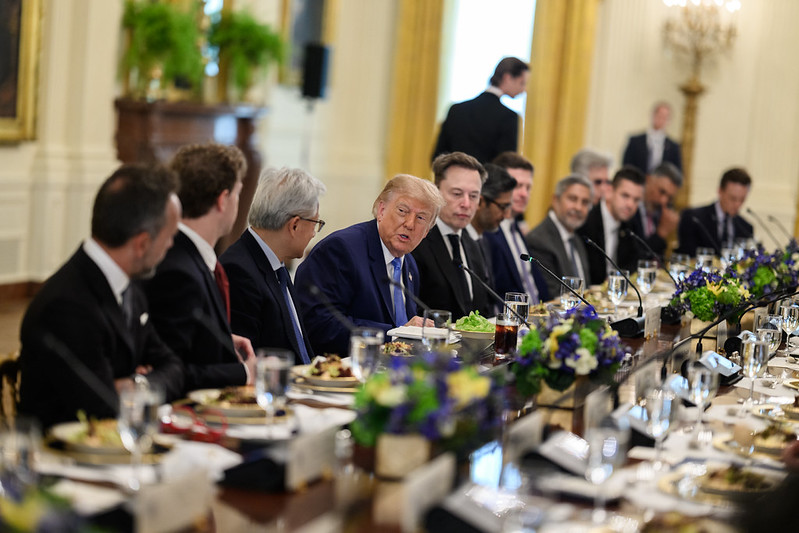
This week President Trump met with AI execs to sign what the President called a “morally binding” compact to self-police. The Washington press corps instead apparently thinks Trump should be calling for the heads of AI executives on pikes. The AI execs are urging a federal takeover of AI under the guise of safety. President Trump is striking a more sensible path, thinks the editorial board.
According to the AI compact, “Every company is responsible for developing its own technology safely and in a way that builds trust with customers and the public.” Its signatories agree to develop “robust” internal monitoring of models, use outside auditors to test them, and designate an independent board committee to oversee the internal safety team, the Journal reports.
This pact is voluntary and more or less concedes the limitations and drawbacks of government regulation, especially in the face of open-weight Chinese models that needn’t abide by U.S. laws. One of the largest, most serious risks is that “bad actors use Chinese models for destructive purposes.” “The best defense is for U.S. models,” continues the Journal, “to develop fast enough to detect and counter such attacks. No regulatory plan we’ve seen would do better against rogues.”
The Guardrail
“The Department of Justice,” President Trump allowed this week.
A Sword Hanging over Them
New laws aren’t needed to punish wrongdoing or negligence. Companies know what is hanging over them. Officials at the Federal Trade Commission this week let it be known that they have opened a probe of frontier AI models to reinforce the point.
The Ratepayer Protection Act
On the other hand, Democrats want to put the federal government in charge of AI. The Journal reports: On the real reason Senate Democrats on Wednesday blocked the Ratepayer Protection Act, which the House passed last month on an overwhelming bipartisan 417-3 vote.”
What the Act Requires
The Act would require state public utility commissions to consider adopting a federal standard under which large data centers pay the incremental costs of new grid infrastructure to support their power loads. The Board thinks this legislation is unnecessary since most states are already doing this. “AI companies are building their own power generation and paying for grid upgrades to connect data centers.”
Senate Minority Leader Chuck Schumer objected to the bill because it isn’t binding. “Senate Democrats want to make it mandatory for data centers to cover their own costs, by law, not by suggestion or hope or whim,” he said.
“No,” counters the Journal, “they want to block data centers to put AI development under political control.”
Bernie Sanders’s bill, which would pause data-center construction until the government ensures they don’t “exacerbate the threat of climate change” and their models “do not threaten the health and well-being of working families, privacy and civil rights, and the future of humanity” or cause “job displacement.”
Bernie’s legislation reflects the growing Democratic consensus.
Had Kamala Harris won the 2024 election, it’s likely the federal government would have used its power to impose a de facto AI moratorium.
“When it comes to AI, Mr. Trump has superior intelligence,” praises the Journal.