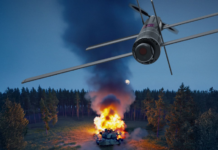
Multiple videos from Venezuela suggest that the US military used kamikaze-style drones during the operation to capture Nicolás Maduro, potentially marking the first real-world deployment of long-range one-way attack drones by American forces, according to Joseph Trevithick of The War Zone. The clips capture high-pitched buzzing sounds followed by explosions, consistent with loitering munitions like the LUCAS drone, a US-developed system inspired by Iran’s Shahed-136.
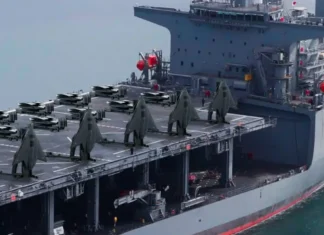
Operation “Absolute Resolve” involved special operations forces, air assets, and helicopters, with drones likely used to suppress air defenses, destroy key targets, and provide reconnaissance. The strike demonstrates a broader US push to expand expendable drone capabilities across the armed forces, including ship- and aircraft-launched systems, highlighting a shift toward more versatile and lethal unmanned strike platforms. Trevithick writes:
Multiple video clips offer strong evidence that kamikaze drones were among the capabilities the U.S. military brought to bear during the operation to capture Venezuelan dictator Nicolas Maduro over the weekend. This may have been the first real-world use of a new slate of U.S. long-range one-way attack drones and loitering munitions. After years of being outpaced by lower-end drone developments overseas, there is now a significant new push across America’s armed forces, and the special operations community in particular, to dramatically step up the acquisition and fielding of various tiers of uncrewed one-way strike aircraft.
Bystanders on the ground in Venezuela captured various videos of the U.S. assault on Saturday, which was officially dubbed Operation Absolute Resolve. In multiple clips, as seen in the social media post below, distinctly terrorizing high-pitched buzzing can be clearly heard, which are then followed immediately by explosions and/or other visual or auditory signs of munitions impacting the ground, all consistent with the use of one-way attack drones. […]
More footage of the strike on Generalissimo Francisco de Miranda Air Base. https://t.co/DT4SbgPeF5 pic.twitter.com/FyNMoVPPve
— SA Defensa (@SA_Defensa) January 3, 2026
Similar high-pitched buzzing sounds, which were followed by impacts and detonations, are featured in a mountain of existing confirmed videos of various types of kamikaze drones powered by small piston engines driving single pusher propellers hitting their targets. The distinctive acoustic signature, in particular, has been consistently present in footage of attacks involving these kinds of uncrewed aerial systems that have emerged from multiple conflict zones globally in the past five years or so. Ukrainian forces have even established a network of acoustic sensors to help spot incoming Russian drone attacks across their country to capitalize on this acoustic signature. […]
Just last October, U.S. Central Command (CENTCOM) disclosed the first known operational fielding of long-range one-way attack drones by a task force in the Middle East led by special operations forces. That unit, officially named Task Force Scorpion Strike (TFSS), is equipped with multiple versions of the Low-Cost Uncrewed Combat Attack System (LUCAS), a design notably reverse-engineered from the Iranian-designed Shahed-136. […]
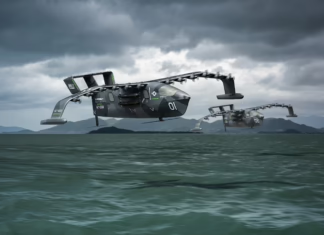
There is the additional possibility that what is seen and heard in the videos are smaller loitering munitions, which U.S. forces could have utilized more dynamically in response to threats as they approached their objectives. The U.S. military now commonly uses the term “launched effect” to refer to these munitions, as well as other uncrewed aerial systems configured for other tasks, all of which are designed to be fired from aircraft, as well as ground and maritime platforms.
The U.S. Army’s elite 160th Special Operations Aviation Regiment (SOAR), better known as the Night Stalkers, elements of which were at the very core of the operation to capture Maduro, have at least been experimenting with employing launched effects from their MH-60 Black Hawk helicopters for years now, though this is not an operational capability, at least that we know of at present. This is a capability also planned for the Army’s conventional Black Hawk fleet, but it would not be surprising for the Night Stalkers to receive it first. With launched effects, MH-60s, or other platforms the 160th operates, would have a new way to react to air defenses, either striking them if they pop up along the way or jamming them. They could also strike small mobile targets if need be. […]
Regardless, the video clips do offer clear evidence of a possible first-of-its-kind use of U.S. kamikaze drones during Operation Absolute Resolve, and more details about their employment may emerge as more becomes known about the mission overall.
Read more here.