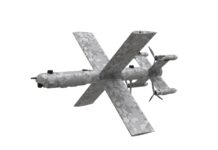
Global Positioning System (GPS) denial is no longer a hypothetical risk but an active, ongoing challenge, as adversaries employ jamming and spoofing in increasingly contested electromagnetic environments. These disruptions affect both military and civilian navigation, underscoring that modern forces can no longer rely on uninterrupted GPS access across air, land, sea, space, or cyber domains.
To address this vulnerability, experts advocate for “contested autonomy” — resilient, software-driven navigation systems that fuse inertial, kinematic, and environmental data, allowing platforms to operate effectively even when GPS signals and communications are degraded or lost.
In War on the Rocks, retired US Air Force officer and former AC-130 aviator Jesse Hamel argues that military requirements, testing, and acquisition processes must evolve to make such resilient navigation capabilities the standard for future operations. Hamel writes:
GPS denial is no longer a theoretical future threat. It is the environment in which modern forces increasingly operate.
China has invested heavily in space and counterspace capabilities designed to degrade U.S. positioning, navigation, and timing. Other state and non-state actors are following close behind. […]
Read more here.