In the WSJ, Kim Strassel talks with her guest, Robert Doar, president of the American Enterprise Institute. Mr. Doar has just returned from a trip to Odesa and Kyiv so he could see for himself the ”state of play in Ukraine.” In May, Mr. Doar wrote a piece with the intriguing heading titled “Ukraine is tired and brimming with energy.”
Kim Strassel starts her interview by asking Mr. Doar about the Black Sea Security Forum he attended and asks Doar to expand on why he was so struck by the perseverance and resilience of the Ukrainian people and leaders in this awful war that Russia started four years ago. The people and leaders are proud of their achievements. Ukraine’s young officer corps has figured out this new modern warfare; Doar thinks better than anyone else in the world. At the same time, the bombings frighten them. Doar compares it to being struck by lightning: there are not a lot of casualties. But the fear is real. It will exhaust the people.
Kim asks Mr. Doar to give Journal readers a sense of what conditions are like on the ground. In general, what did Mr. Doar do during his time in Odesa and Kyiv? “I mean,” asks Ms. Strassel, “Do you feel as if you’re in a constant war zone? Has everything just been demolished? Is it still beautiful? How’s it looking?”
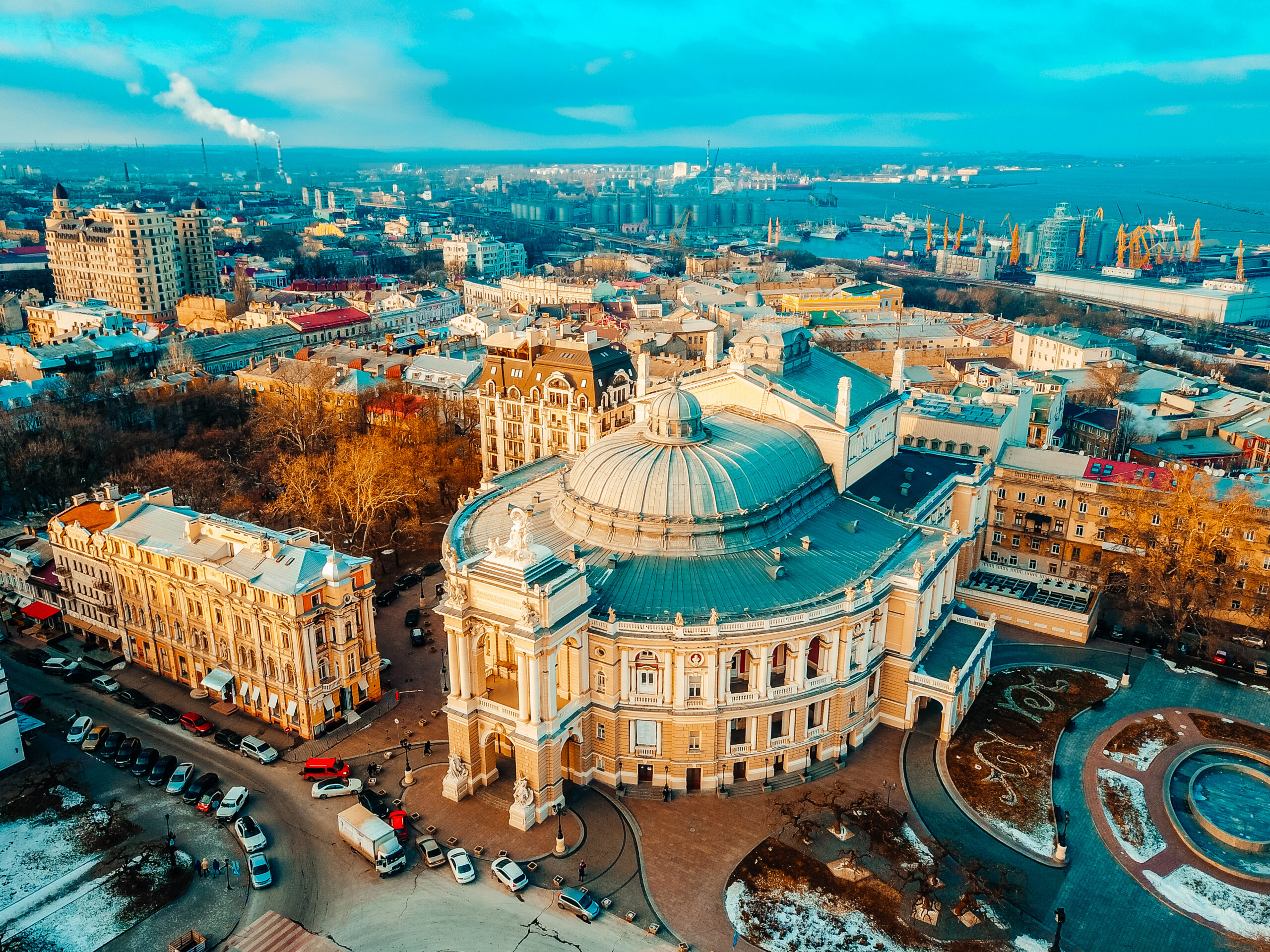
Doar describes Odesa as a beautiful city to Ms. Strassel. Lively and active. In … daily activity, “there’s really no sense that there’s a war around. Odesa is … quite a lovely city. The Black Sea Port was operating in production. We were entertained by the Odesa Orchestra and the Odesa Ballet Company. Traveling 300 miles or so from Odesa to Kyiv, moving quickly through gorgeous farmland, a long, wide open plain of fertile fields of corn, sunflowers, and (inaudible) seed. And then Kyiv is also an active city.”
Doar stayed at a hotel not far from the university. “There were young people and people moving around and engaging in the normal way you would in a city. It’s a pretty lively and active city.”
However, when you dine, check into a hotel, … you are alerted if the sirens go off, you need to move toward underground protection. While Doar was in Ukraine, there was no dramatic bombing, “although there was the night after I left, and it was quite significant, so we’re a long way from the front line. I didn’t see the frontline. Ukraine is a very large country. It’s the largest country in Europe outside of Russia.”
“You can feel safe,” Doar mentions, “surrounded by an active society.”
“And that’s another thing, Kim, it’s a democracy. I’ve been around American politicians and other politicians from around the world. I know what they’re like. They’re ambitious, they’re jostling, they’re trying to see if they can be the next leader. There was quite a lot of that in Ukraine, I sensed in both the leaders at the Odesa Conference, which was led by Ukrainian legislators in the federal legislature, and in Kyiv at a large conference that I went to. And I like that because it is in such contrast to whatever it is that’s going on in Moscow, where there isn’t that kind of democracy or activity or freedom, but it’s boisterous.”
Doar explains to KS how Zelensky has to do some maneuvering to keep himself in power and to figure out how to handle a potential election in the coming year. Doar explains how he is used to having been around American democracy for a long time, mayors and governors and senators and congressmen, “I’m used to that and I kind of like it, but it’s not 100% stable because it could change.”
KS thinks that’s one particular area where Americans get a lot of misinformation about Ukraine.
There’s been an active attempt, I think, by certain politicians in this country to actually suggest that this is a little bit of an oligarchy or corrupt and my impression now underscored by what you had to say has always been that this is a place, it’s not as stable a democracy as the United States, but it’s certainly in a lot better shape than for instance, Russia or a lot of other countries in the world. Yes.
Doar continues, “Well, it’s a place where people can get up and raise a criticism of the current leadership and can talk about potentially being the next leader. It’s a place where Petro Poroshenko, who was Zelenskyy’s rival in the last election, can meet with him and join us in the conference and state his view of how things are going. And so I just found that much gratifying and confidence-building, but it also makes it… You realize how hard it is for a democracy to fight off a country like Russia, where Putin can send soldiers into killing fields without really thinking about the enormous casualties that’s taking on his people.”
Kim Strassel now wants to move on to the battlefield, explaining to Doar how frustrating it is not to hear more about this right now, in part because this administration has not made it a priority. Upon taking office, Trump promised to resolve all of this within 24 hours. Not going to happen, with the attitude of the White House sometimes coming across as though wishing it would all go away. “But the battle has continued.”