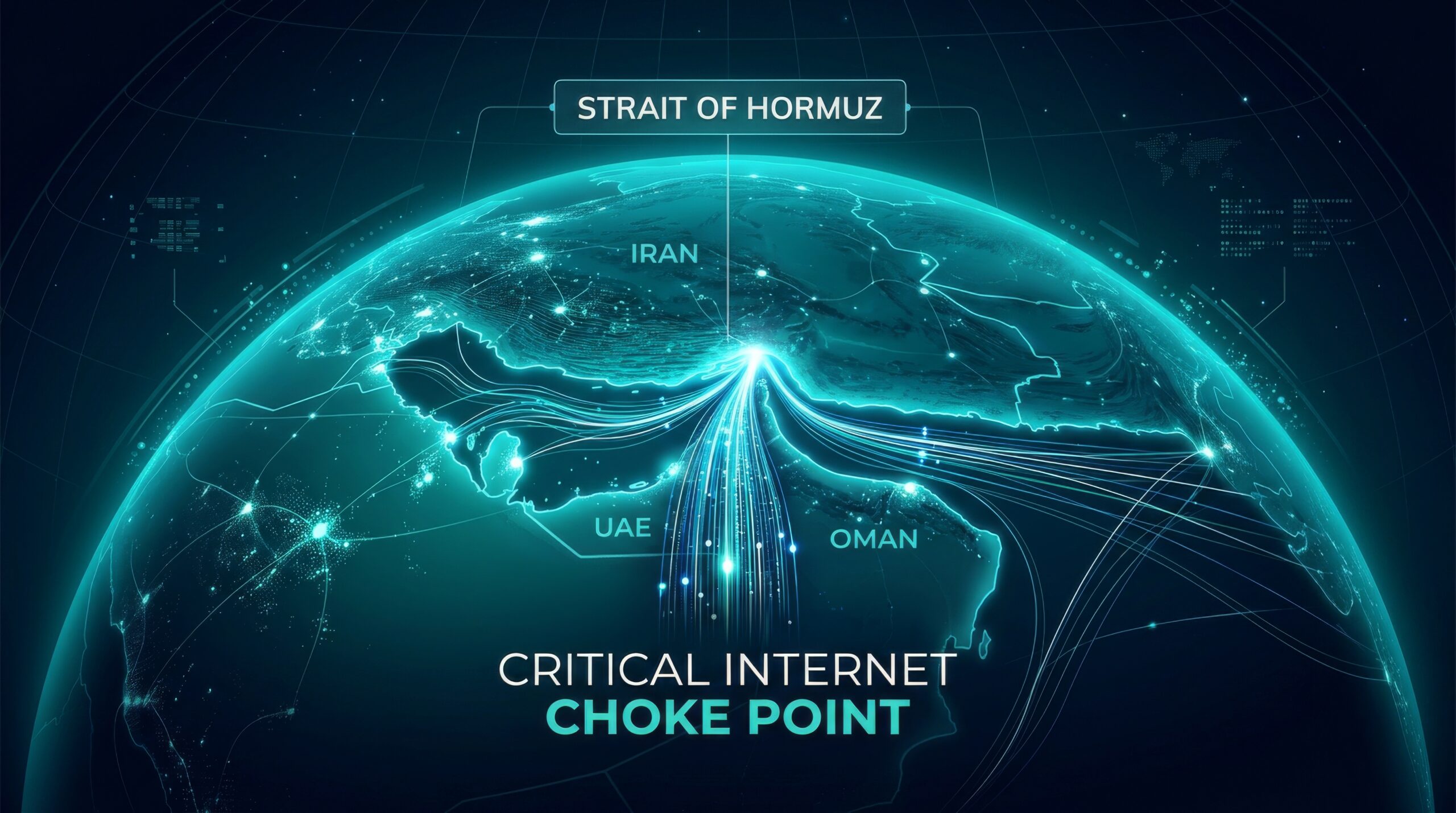
A Bloomberg article reports that the ongoing Iran conflict is disrupting undersea internet cable projects in the Persian Gulf, as companies pause or suspend work amid rising security risks. A cable-laying vessel reportedly halted operations and left the area after conditions became unsafe, with concerns including mines, missile threats, and broader military activity. As a result, several major fiber-optic projects connecting Europe, Asia, and the Middle East have been delayed or placed on hold.
These disruptions are drawing attention to the growing strategic importance of the region’s digital infrastructure. The Times of India reports that Iran’s Islamic Revolutionary Guard Corps (IRGC), through affiliated media outlets, is proposing a plan to generate revenue by monetizing and controlling undersea fiber-optic cables passing through the Strait of Hormuz—effectively treating the route as a “digital toll booth” where foreign operators could face fees or regulatory conditions. Because these cables carry a large share of global internet traffic, any disruption, restrictions, or added costs could impact global connectivity, routing, and pricing.
Reuters reports separately that the Strait of Hormuz is increasingly viewed as a digital chokepoint, since key subsea cables running through the area are now exposed to risks from regional conflict. While no large-scale damage has occurred, experts warn that military activity or accidents could still disrupt global internet flows across Asia, the Middle East, and Europe, underscoring the region’s growing importance in both energy and digital infrastructure.