

You are living in a “haves and have yachts” world, with the “haves” being the steady economy and the “have yachts” being the rock star stock market. They aren’t running at the same pace. But that’s where we are.
Whether this divergence continues is the question. It’s why if you’ve won the war and are in or heading into retirement, developing a plan where you can be invested and stay invested is paramount.
Now, as you know, Your Survival Guy wants you to take the trips and spend some money. But it’s not cheap. Going to Paris? Bring your euros and plenty of them. But don’t miss the boat by not going, thinking prices will be lower next year. They probably won’t be. And you’ll be a year older to boot.
Which brings us to prices for stuff we need to live day to day. Inflation is a thing. And the idea of stripping out food and energy in calculations is the typical stuff you get from economists who don’t live in the real world. Stuff we need to survive and thrive isn’t getting cheaper either. But innovation has a way of deflating prices. Look at the potential for clean coal and the demand for more power.
America has an immediate need for more power to feed the growth of artificial intelligence data center demand. Big tech firms prefer nuclear generation that doesn’t emit any pollutants, but a large scale ramp up isn’t imminent, as it takes so long to add nuclear capacity to the grid. The next choice would be natural gas, but turbine producers are already running near maximum capacity. Recently, they’ve announced plans to increase capacity, but that could take some time. Utility Dive reports:
- Mitsubishi Heavy Industries plans to double its manufacturing capacity of gas turbines over the next two years in response to spiking demand and a backlog of orders, Bloomberg reported Sunday. Average wait times for gas turbine delivery have recently increased by several years.
- GE Vernova, another gas turbine manufacturer, announced on Aug. 19 that it is investing $41 million to enhance the manufacturing of its H65 and H84 generators, used in the company’s HA gas turbines. Siemens Energy, another gas turbine manufacturer, announced in December last year that it’s adding 61,000 sq ft to a facility that makes blades and vanes for its turbines.
- “An individual [original equipment manufacturer] doubling production could increase overall output by 15-40% based on historic data,” Bobby Noble, senior program manager of gas turbine research and development at the Electric Power Research Institute. “It should help over time, but it is likely not enough to drastically reduce [wait times].”
With long wait times for nuclear and for gas turbines, power producers may look to inexpensive coal generation. Energy Secretary Chris Wright and the Trump administration are supporting coal with a renewal of the National Coal Council. The Energy Department announced recently:
U.S. Secretary of Energy Chris Wright is advancing President Donald J. Trump’s commitment to reinvigorating America’s coal industry by renewing the charter for the National Coal Council (NCC), a Federal Advisory Committee that was terminated during the Biden administration. This follows the President’s April 2025 Executive Order, calling for America to take aggressive action on coal. The coal industry supports hundreds of thousands of jobs and adds tens of billions to the U.S. economy each year.
Coal production has long been the backbone of American energy prosperity, ensuring affordable and reliable power. As electricity demand surges, driven by manufacturing growth and the expanding needs of artificial intelligence and data centers, the NCC will provide critical guidance on coal’s role in strengthening the U.S. energy landscape.
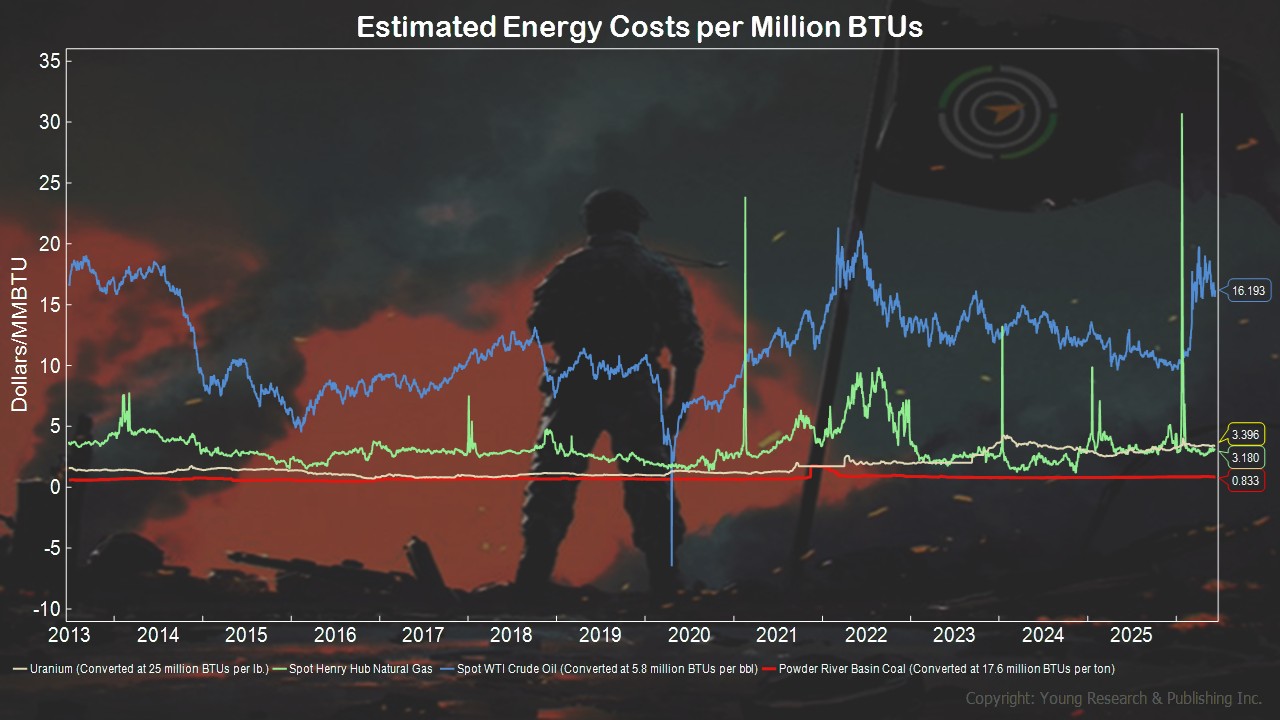
On a BTU basis, coal from Wyoming’s Powder River Basin is much cheaper than natural gas, nuclear, and oil in the United States.
But war and politics have a way of scrambling signals from what might otherwise be an orderly economic cycle. When the data feed is full of noise, sometimes clearer pictures can push their way through. Here are some of the things Your Survival Guy is paying closest attention to.
First, oil. It seems like it should go without saying that with a war in Iran, oil, and more generally traffic through the Strait of Hormuz of all products (including fertilizers and plastic feedstocks) needs to be front and center in the minds of anyone looking at the global economy.
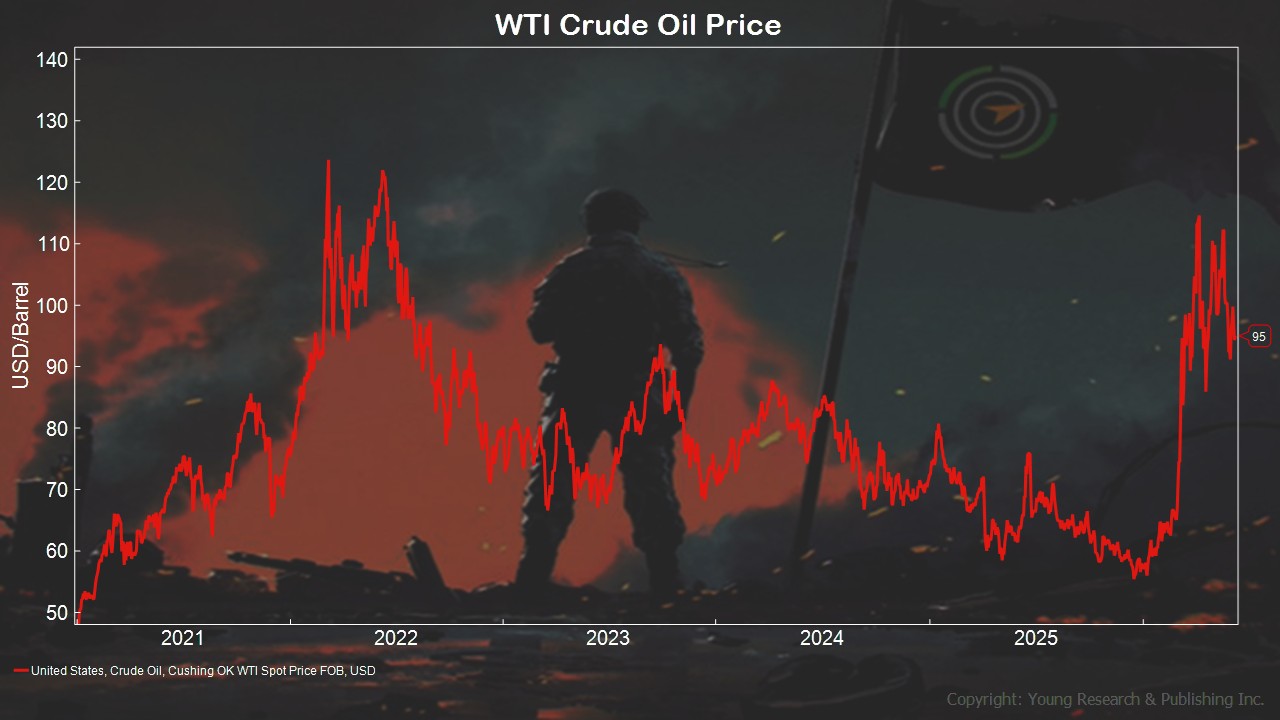
WTI crude oil prices have oscillated wildly since the United States and Israel began their war on Iran. Prices closed at $95/barrel last night, a major increase compared to this time last year, when WTI crude closed at $64.5/barrel.
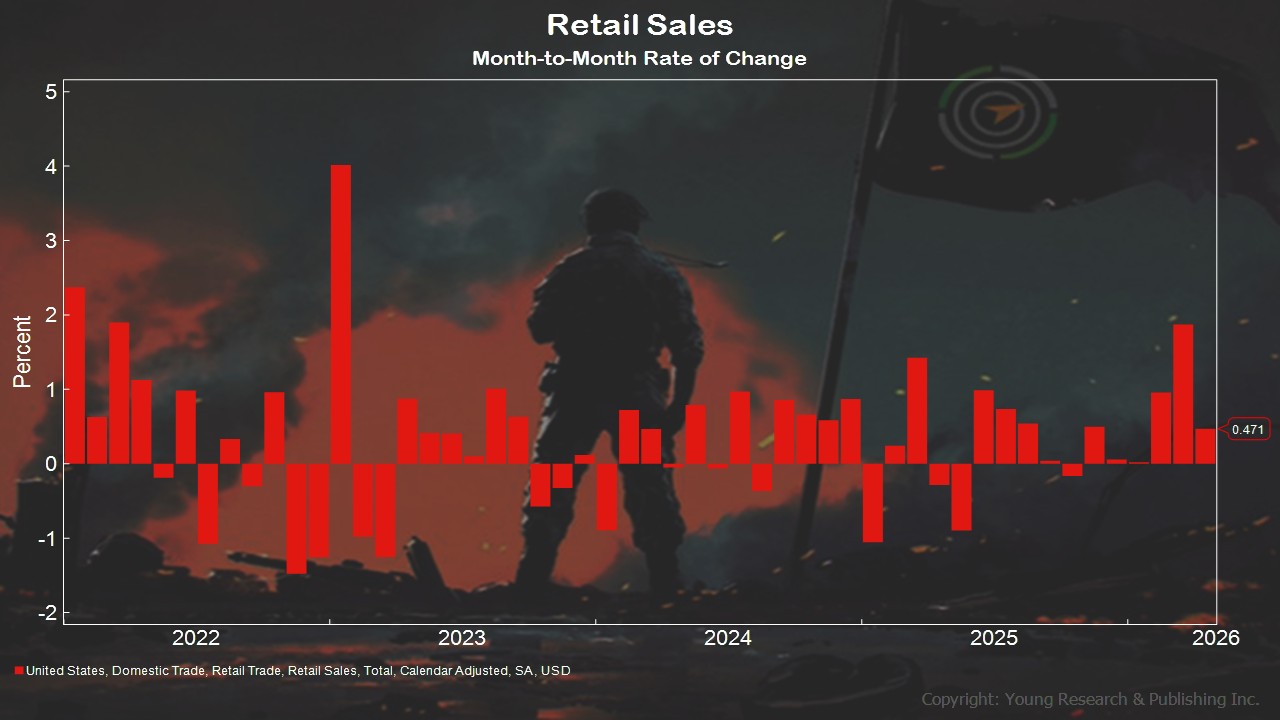
The high oil prices haven’t dampened retail sales, which grew for a sixth consecutive month, though some retailers, like Walmart, are warning about the future. Walmart CFO John David Rainey told CNBC that consumers could feel more pressure now that tax refunds are spent. He said, “I think higher tax returns muted some of the pressure related to higher fuel prices and as we’re in a period of time right now where those tax refunds are largely not coming in, I think consumers are going to feel more of that pressure from higher fuel prices.”
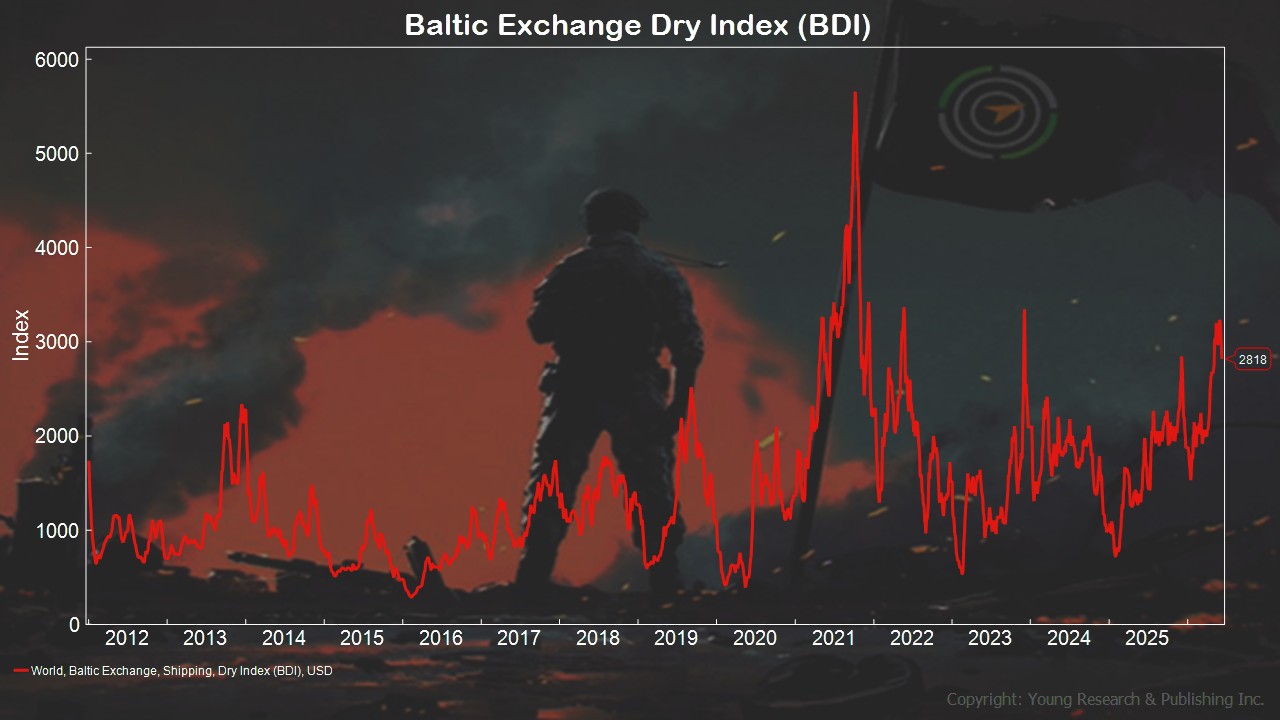
Another cost of the war has been an increase in shipping prices. Both the Baltric Dry Index and the Drewry Shipping Index have climbed since the war began. Costs of shipping and higher oil prices are adding to rising inflation. Year-over-year CPI came in this morning at 4.2%. The highest reading since April of 2023 (during the Bidenflation spike). 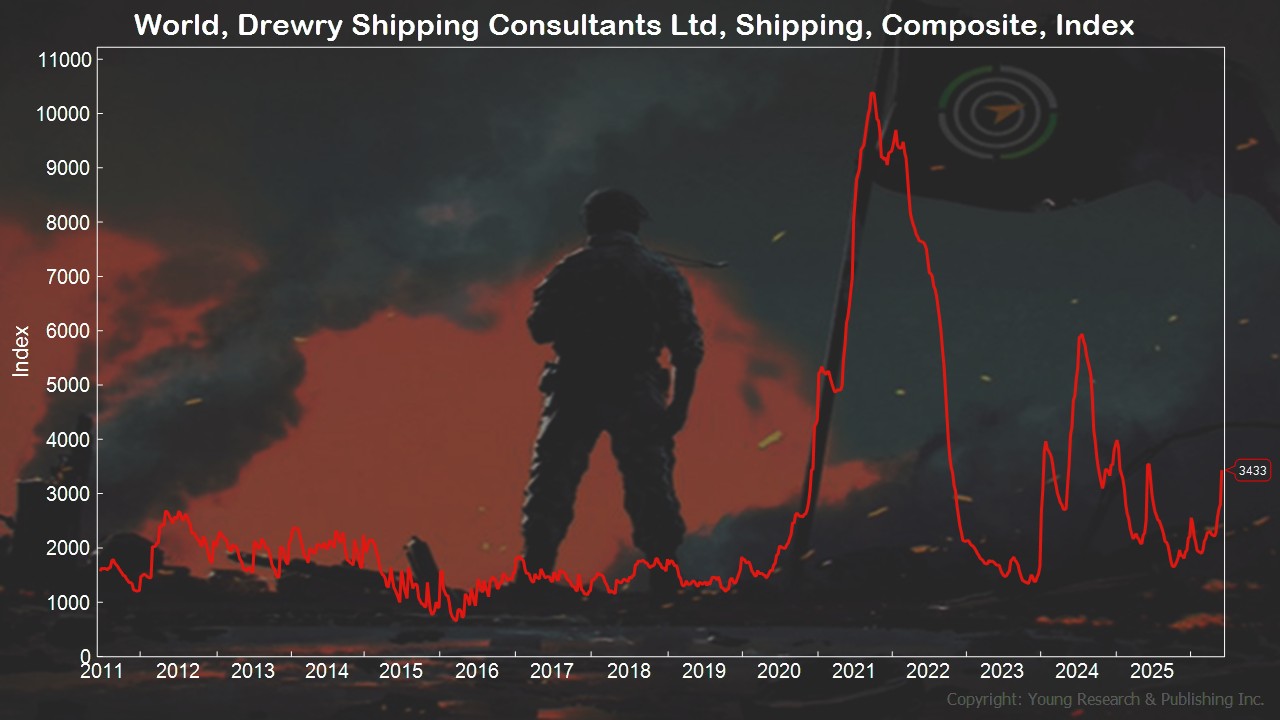
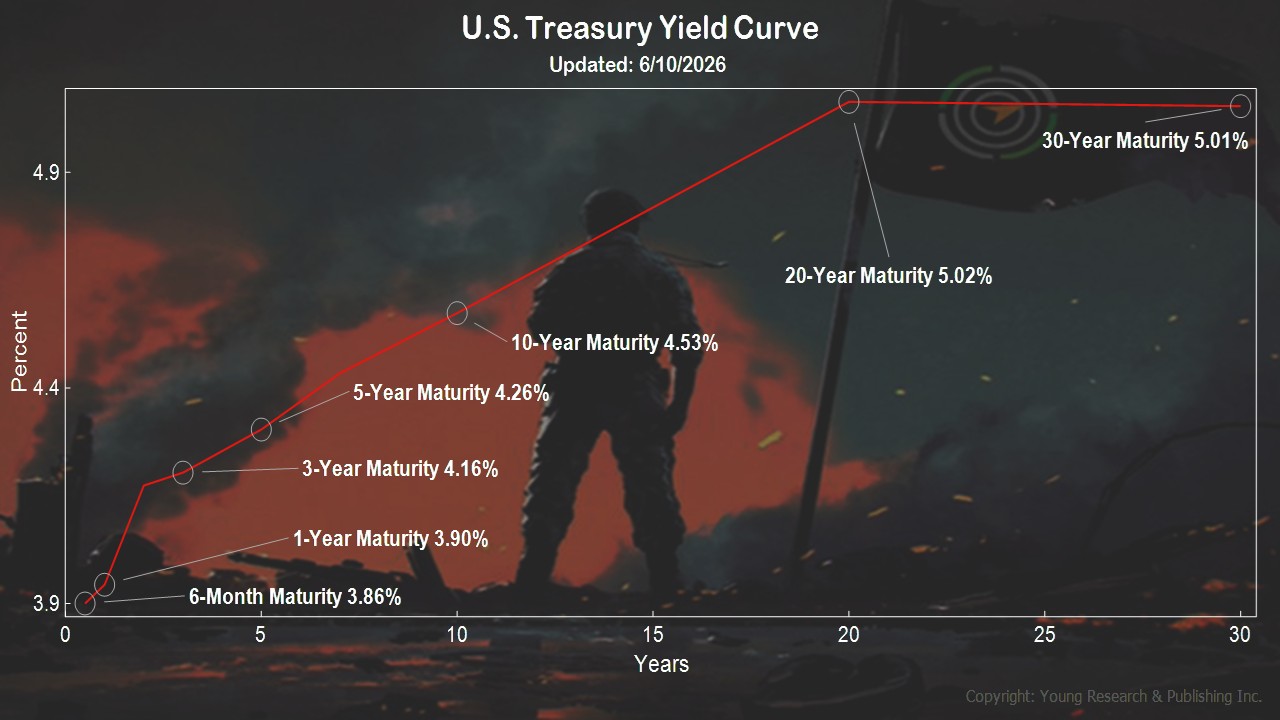
 With rising inflation in mind, the market for treasuries has driven long bond yields up over 5%.
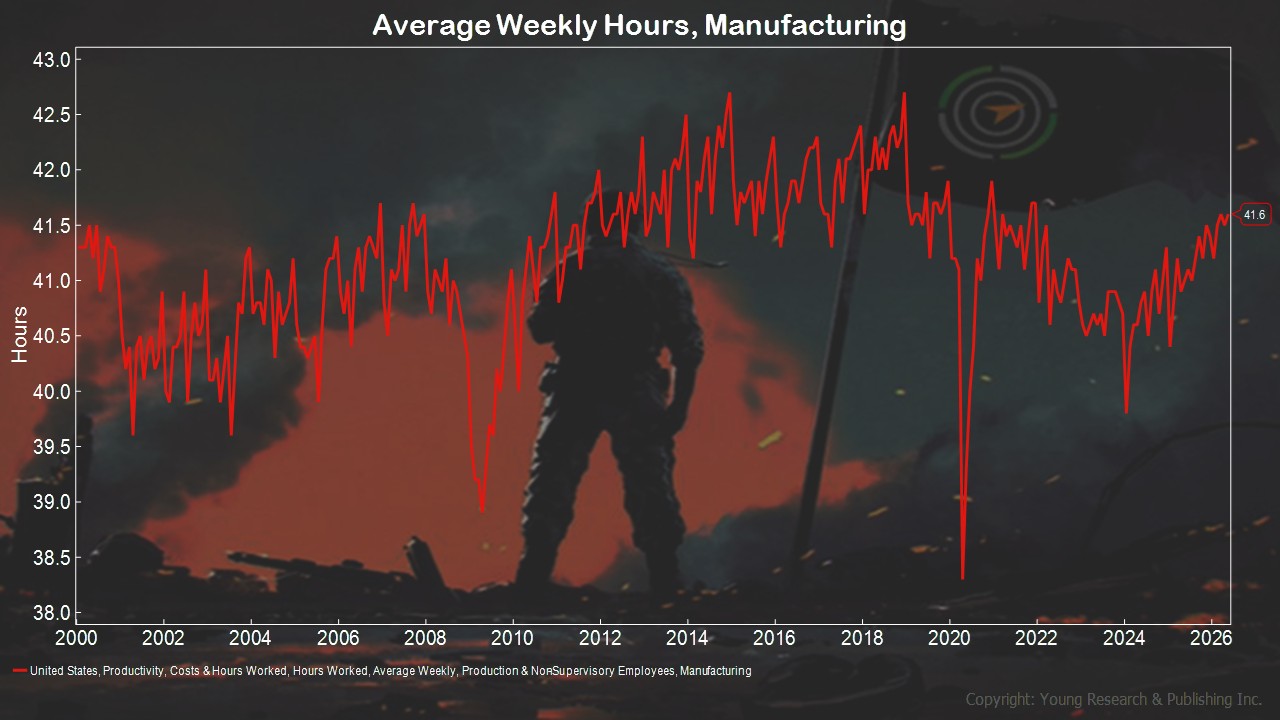
 Despite inflation fears, the economy is still moving. Average weekly hours for manufacturing workers are climbing. Higher hours for manufacturing workers are indicative of overtime shifts, while a decline in hours can coincide with a coming recession.
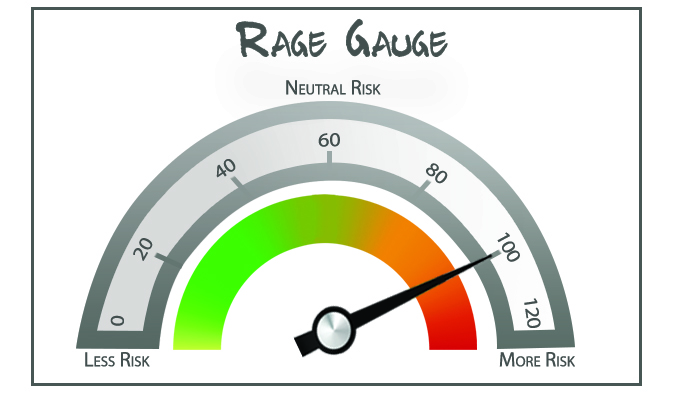
The RAGE Gauge remains elevated as a strong stock market vies with an unsettled world, and consumers who aren’t feeling great about the economy in the face of inflation for dominance over American investors’ sentiments.
Action Line: In times of uncertainty, the best way forward is usually having a plan and sticking to it. The economy is moving, but there are risks. Prepare yourself accordingly. When you want help, email me at ejsmith@yoursurvivalguy.com.
Originally posted on Your Survival Guy.


