Historically, a kill zone referred to a deliberately prepared area where advancing forces are exposed to concentrated fire from artillery, machine guns, or anti-tank weapons, according to United24.
In Ukraine, however, this concept is evolving as drones, sensors, and robotic systems reshape the battlefield. The result is a new type of “kill zone” built not only on trenches and artillery, but on a layered system of drones, remote mining, and robotics designed to slow, isolate, and destroy advancing forces.
Nearly 1,000 Russian troops and 196 pieces of equipment were reportedly destroyed in December 2025 through Ukrainian remote mining operations, according to the General Staff of the Armed Forces of Ukraine. The figures highlight the growing battlefield impact of explosive-laying tactics conducted from a distance.
The article emphasizes Ukraine’s increasing use of drones and ground robotic systems to deploy mines and explosives, allowing engineers to operate without entering high-risk areas. These unmanned systems are also being used in direct strike roles, capable of taking out armored vehicles as well as enemy trenches and fortified bunkers. This approach improves both efficiency and precision while significantly reducing risk to personnel.
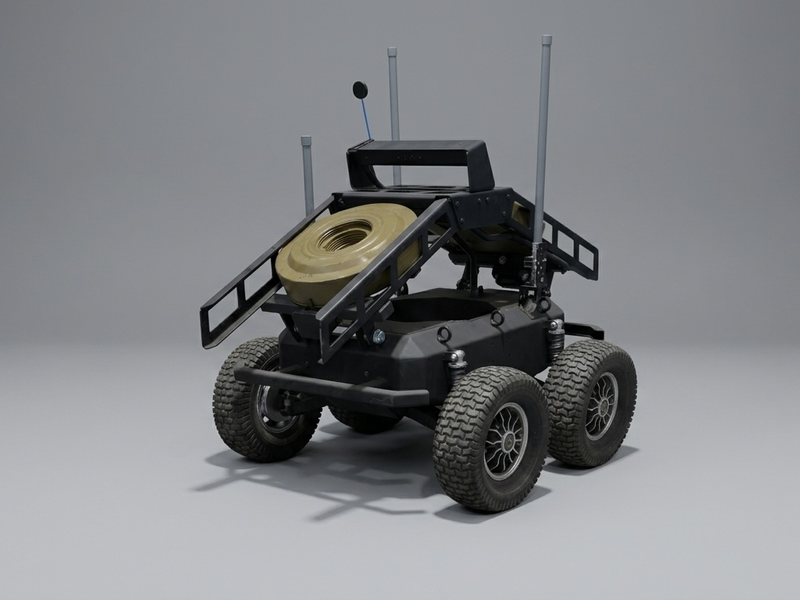
A key example of this capability is the RATEL S, a dual-purpose unmanned ground system designed for both mine-laying and kamikaze strike missions. It can carry up to 20 kg of payload, operate up to 10 km on roads, and reach speeds of about 20 km/h off-road, while also providing surveillance through onboard imaging systems. Compact and remotely controlled, it reflects Ukraine’s shift toward flexible, low-cost robotic platforms for both mining and direct attack roles.