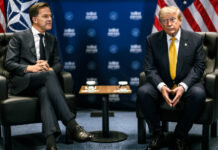
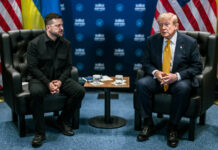
Florence Gaub and Roderick Parkes explain at War on the Rocks that Europeans are often underestimated in their willingness to fight, not due to inherent weakness, but because elites assume societal fragility. This elite pessimism shapes defense policy—constraining mobilization, recruitment, and retention—creating self-fulfilling doubts about “will to fight.” In reality, willingness is a social potential, influenced by trust, motivation, and leadership. Democracies with freedoms, diverse populations, and individualistic values can be highly resilient when conditions inspire collective purpose. Misreading society—through surveys, historical analogies, or professionalized militaries—risks undervaluing latent capabilities. Effective defense planning requires leaders to engage with society, build structures that support participation, and trust people as much as technology. By doing so, nations can cultivate a motivated citizenry ready to defend their way of life, countering assumptions that democracy equals weakness. They write:
Europe’s populations are readier to fight than they are often credited. The problem isn’t their lack of will, but elite pessimism about it.
The belief that Europeans are too soft to fight — too coddled, too individualistic, too “post-heroic” — is quietly shaping policy decisions about mobilization, recruitment, and spending. Military veterans, academics, and arguably even European leaders appear more worried with divisions in their own societies than with the adversary itself. And even where self-confidence is growing — in Finland or Poland — it is often tempered by doubts about the crucial question of whether other allies would defend them if attacked.
This skepticism feels plausible — but it risks becoming self-fulfilling. “Will to fight” is not a fixed category. Instead, it is a social potential: something that can be cultivated or suppressed. […]
Entrenched pessimism, when baked into defense planning, becomes a trap. Leaders should ask a different question: not “What if they won’t fight?” but “What if they would — if the conditions were right?” […]
People should trust the leaders who guide them, and leaders should trust the societies they serve. Building that mutual confidence demands proximity, in which leaders help to shape society and are, in turn, shaped by it. Policymakers can take several steps to turn that insight into planning and preparation.
Read more here.