Bounced Checks and Financial Security
Recently reported from the Congressional Budget Office:
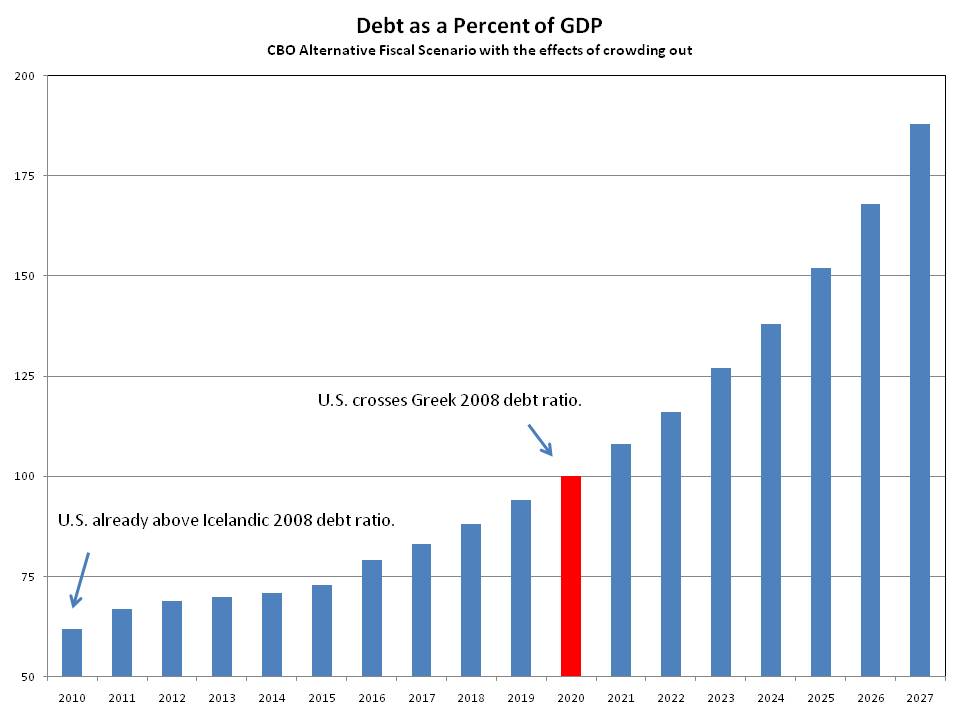
The federal budget deficit totaled $509 billion in the first quarter of fiscal year 2024, the Congressional Budget Office estimates. That amount is $87 billion more than the deficit recorded during the same period last fiscal year: Although revenues this year were $83 billion (or 8 percent) higher, outlays rose more—by $170 billion (or 12 percent).
Spending in two areas increased substantially. Net outlays for interest on the public debt were substantially higher, increasing by $73 billion (or 49 percent), primarily because interest rates are significantly higher than they were in the first three months of fiscal year 2023.
The outlays of the Federal Deposit Insurance Corporation (FDIC) rose by $62 billion as a result of facilitating the resolution of bank failures that occurred in 2023. The FDIC expects to recover much of that amount by continuing to liquidate the banks’ assets and by collecting higher premiums from FDIC-insured institutions over the next several years.
The Federal Debt Noose
The last is a tax on bank customers. As James Freeman notes in the WSJ, that pales in comparison, however, to “the tax burden all Americans will face as they try to bear the massive weight of federal debt.”
A Reckoning from Biden’s Spending Spree
Washington’s inflationary spending and Fed rate hikes helped trigger last year’s bank auctions, explains Mr. Freeman.
Only someone completely unconcerned about the health of banks would embark on the latest White House initiative.
From President Joe Biden
Exorbitant overdraft fees charged by big banks – sometimes $30 or more – hit the most vulnerable Americans the hardest.
Banks call it a service. I call it exploitation.
Today, we’re taking them on.
The exploitation of this issue by a politician seeking re-election is probably not shocking to most. Nonetheless, offers Mr. Freeman it is irresponsible,
Most Americans may think Mr. Biden lacks the mental sharpness to do his job, but surely he can understand the threat to the financial system—and to the ability of consumers to find banks willing and able to serve them—if government deems that bad checks must be largely free of consequences.
The soundness of the financial system and the health of our economy rely on people covering their checks, paying their bills. A White House press release describes overdraft charges as what happens when “companies sneak hidden junk fees into families’ bills.”
The release carries no claim that such fees are being applied to customers who didn’t bounce checks, continues Mr. Freeman. “What consumer fee could be more justified and straightforward?”
It’s a strange time even by Washington standards when one has to debate whether bad checks ought to be encouraged or discouraged.
As if the finances of the U.S. Treasury aren’t concerning enough, it seems the president also wants to create cause for concern about U.S. financial institutions.