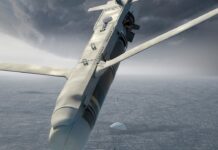
China is rapidly building a vast multi-layered maritime surveillance network called Transparent Ocean, designed to detect submarines from the seabed to space and challenge US and allied undersea operations across the western Pacific. The system links satellites, buoys, underwater vehicles, and seabed sensors into a resilient “kill web” capable of tracking and targeting submarines in real time, according to Defense One. Recent China-Russia exercises showcased early versions of this integrated network. Supported by universities and state research institutes, the initiative reflects China’s civil-military fusion strategy, with advances in undersea robotics, power systems, and communications feeding directly into military use. Analysts warn that once fully operational, Transparent Ocean could severely restrict allied submarine movement in key choke points like the South China Sea and around Taiwan, prompting calls for the US and partners to develop counter-sensing tactics, decoy systems, and autonomous undersea defenses to survive in increasingly transparent waters. They Write:
The People’s Liberation Army is building an “invisible net” across the western Pacific, a five-layer, seabed-to-space sensor architecture known as the Transparent Ocean strategy that challenges the ability of U.S. and allied submarines (our “black sharks”) to maneuver and hide.
The threat was on display in August during the PLA Navy and Russia’s Joint Sea-2025 exercises near Vladivostok. In joint anti-submarine warfare drills, Chinese and Russian forces linked their communications and shared hydro-meteorological and air-sea tracks in real time. The goal, according to Chinese state media, was to leave deep-diving submarines with nowhere to hide. […]
In an influential primer, “From Kill Chain to Kill Web,” PLA theorists warn that a traditional, linear “kill chain” collapses when a single node is destroyed. Their response is the “maritime adaptive kill web,” a resilient, mesh-style network that offers multiple paths from sensor to shooter and promises instant bypasses for any node failures. […]
The U.S. and its allies should watch for Transparent Ocean work, especially in key choke points such as the South China Sea, waters around Taiwan, the Luzon Strait, the Straits of Malacca, and approaches to Guam. […]
Allies should stitch these efforts into more cohesive acquisitions and a shared, rehearsed playbook. Near-term priorities must include joint deception drills and seabed docking trials that remove human logistics from long-endurance UUV operation, as well as being prepared to deploy or even pre-position counter-UUV patrol boxes where PLA buoys and gliders already operate.
Read more here.