In “Operation Absolute Resolve: Anatomy of a Modern Decapitation Strike,” Josh Luberisse of SOF tells readers that the recent operation to capture Nicolas Maduro in Venezuela relied on months of intelligence collection, stealth surveillance, and a large-scale suppression of Venezuelan air defenses involving more than 150 aircraft. A decapitation strike targets an enemy’s top leadership to disrupt command, cripple coordination, and weaken the ability to fight. Delta Force carried out the ground assault while electronic warfare and air strikes neutralized defenses, enabling a rapid extraction with no US fatalities. The operation underscores the primacy of intelligence, the integration of ISR, electronic warfare, airpower, and special operations, and the US military’s ability to rapidly compress the kill chain. Luberisse writes:
Decapitation strikes live or die on intelligence. The operation to capture Maduro required answering a deceptively simple question: where will the target be, precisely, at the moment of execution? Getting this wrong means mission failure or, worse, hitting the wrong target. […]
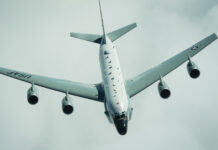
This human intelligence (HUMINT) layer was complemented by persistent technical collection. An RQ-170 Sentinel—the same stealth drone platform that overflew Abbottabad before the Bin Laden raid—was observed returning to Roosevelt Roads Naval Station in Puerto Rico after the operation. The RQ-170 is designed for penetrating contested airspace to collect imagery and signals intelligence. Its presence confirms that the U.S. had been conducting ISR overflights of Venezuela well before kinetic action began.
At least one, and possibly two, US Air Force RQ-170 Sentinel stealth drones appear to have supported the Operation as well, The War Zone reported. The highly secretive drones likely provided persistent ISR, tracking Maduro’s movements, mapping defenses, and delivering real-time intelligence during the assault—mirroring their role in the Bin Laden raid.
VERY RARE: Footage shows a U.S. RQ-170 stealth drone returning to Puerto Rico after reportedly supporting last night’s U.S. strikes on Venezuela.
The RQ-170 Sentinel is a stealthy, high-altitude unmanned aerial vehicle developed by Lockheed Martin’s Skunk Works. pic.twitter.com/R2qQI3TyvK
— Clash Report (@clashreport) January 3, 2026
The solution was a comprehensive SEAD campaign executed simultaneously with the helicopter ingress. According to Chairman of the Joint Chiefs General Dan Caine, the operation involved over 150 aircraft operating from more than 20 locations. The package included F-22 Raptors, F-35 Lightning IIs, F/A-18 Super Hornets, EA-18G Growlers, E-2D Hawkeyes, and—notably—B-1B Lancer strategic bombers.
The Growlers deserve particular attention. The EA-18G is the U.S. Navy’s primary electronic attack platform, capable of jamming enemy radar and communications while also delivering kinetic effects with AGM-88 HARM missiles. Their presence, along with at least one EC-130H Compass Call electronic warfare aircraft, suggests a significant electronic attack component designed to blind Venezuelan air defenses during the critical helicopter transit windows.
The key to success was extensive on-the-ground preparation. US special forces, including Delta Force, trained for weeks on an exact full-scale replica of Maduro’s safe house, rehearsing entry routes and room layouts to ensure precision, as reported by Reuters. Meanwhile, a small CIA team had been operating inside Venezuela since August, tracking Maduro’s pattern of life and providing detailed intelligence that made the raid seamless. This combination of meticulous training and actionable intelligence allowed US forces to move decisively when the operation commenced.
President Donald Trump suggested that the United States also leveraged cyber and technical capabilities during the raid, plunging Caracas into darkness to aid the operation, as reported by Politico. Trump noted that the city’s lights were “largely turned off due to a certain expertise that we have,” implying that US electronic or cyber actions helped create conditions favorable for both air strikes and troop movement. Officials, including Gen. Dan Caine, confirmed that Cyber Command, Space Command, and other coordinated effects were layered to help “create a pathway” for US forces, though exact details remain undisclosed.
Analysts say Absolute Resolve will be studied as a modern case study in asymmetric warfare and joint special operations execution.