
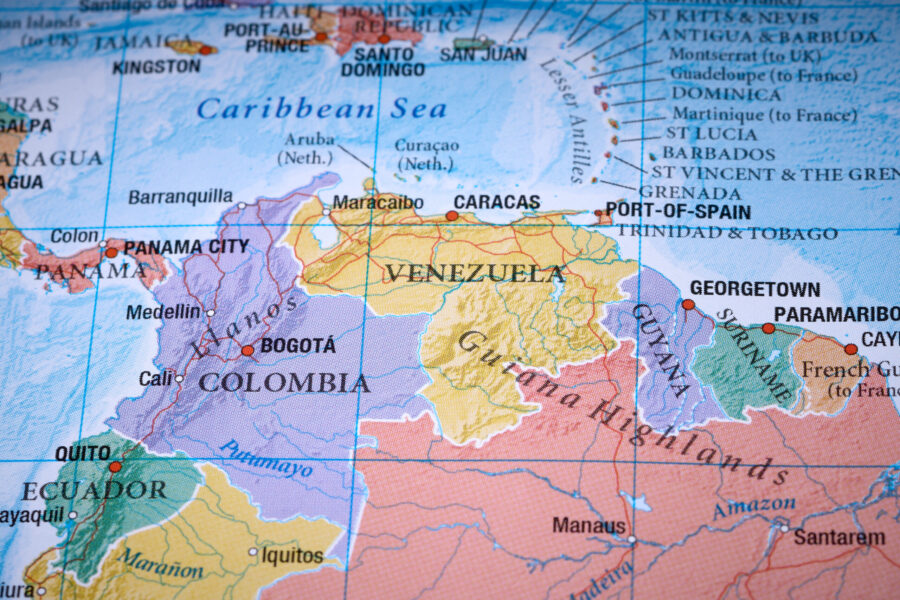
After President Trump ordered a decapitation strike in Venezuela to arrest Nicolas Maduro and his wife and bring them to the United States to stand trial, a new relationship was built with the country’s new leadership, including acting president Delcy Rodriguez.
A wave of American and European oil companies has gone to Venezuela to attempt to reopen relations with the country and to either begin or restart operations there. At first, big oil companies like ExxonMobil and ConocoPhillips were not interested, deeming the country still too risky. But even those Big Oil companies have begun to nose around Venezuela looking for opportunities. The Wall Street Journal reports:
In recent weeks, both Exxon and Conoco have met with Venezuelan officials and sent technical teams to the Latin American country. Exxon’s team inspected the Cerro Negro heavy-oil project that it operated before 2007 when Hugo Chávez’s government nationalized much of the country’s energy infrastructure. Conoco is also trying to assess oil-and-gas opportunities.
You can see in the chart below that Venezuela has had a very difficult time raising the value of its oil exports after they peaked in 2008.

Mike Wirth, CEO of Chevron, the one big Western oil company that hadn’t abandoned Venezuela, discussed the country’s future with Margaret Brennan of Face the Nation. Wirth explained that the country is interested in more U.S. investment.
Chevron CEO Mike Wirth said progress has been made by Venezuela’s interim government, led by Delcy Rodriguez, to reform its energy sector and make it easier for some American oil companies to invest there.
“It still needs some work. It’s probably not enough to bring in the level… pic.twitter.com/YICndRcMTM
— Face The Nation (@FaceTheNation) April 30, 2026
Yesterday, President Trump announced that the newly revived relationship between the United States and Venezuela was making money for both countries.
PRESIDENT TRUMP: We’re getting along great with Venezuela. We are working very closely with them.
They are doing more oil now than they have done in decades. They are making more money and so are we. pic.twitter.com/w6ZOHU9uHj
— Department of State (@StateDept) April 30, 2026


