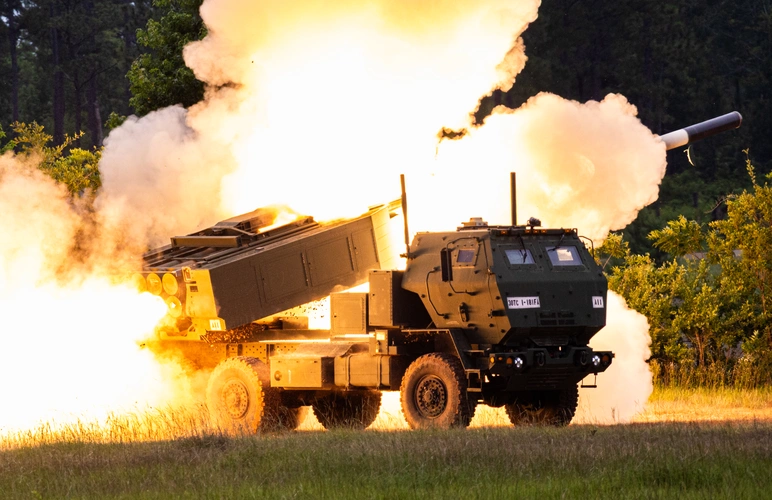
The Pentagon reports that the ground-launched Precision Strike Missile (PrSM) made a successful combat debut in the early hours of the Iran conflict, providing long-range, precise strike capabilities from HIMARS and MLRS launchers. With a greater range than ATACMS and a smaller size that allows double the load per launcher, PrSM enhances survivability and mobility compared to air- or sea-launched weapons.
From Battlefield Impact to Global Deterrence
PrSM proved especially effective at targeting air defenses and command networks, supporting air and naval operations, and could strike pop-up targets quickly. Its capabilities also make it valuable for deterring China in the Indo-Pacific and countering Russian aggression in Europe.
Limited Stockpiles, Urgent Need to Scale
Despite combat success, US procurement remains limited, with fewer than 500 missiles acquired across fiscal 2024–26, according to of DefenseOne. Analysts urge rapid expansion of production and stockpiles to meet current conflicts and prepare for future threats.
Lockheed Martin Ramps Up Production at Scale
Lockheed Martin announced in August of 2025 that it is rapidly scaling production across missiles, launchers, and satellites to meet rising global defense demands and strengthen US and allied deterrence. Key programs include:
- PAC-3 MSE: Production set to exceed 600 missiles in 2025, ramping to 650 by 2027 to meet domestic and international demand.
- GMLRS: Annual production ramping to 14,000 rockets to support U.S. and allied partners.
- HIMARS: Launcher capacity doubled to 96 units per year, supported by $2.8B in U.S. Army contracts.
- PrSM: Increment 1 production scaling to 400 missiles per year, with focus on surge capacity.
- Javelin: Production line modernization to reach 3,960 units annually by late 2026.
- JASSM & LRASM: Production expanded under $3.2B contracts with the U.S. Air Force and Navy.
- Small Satellites: New 20,000 sq. ft. facility enables processing and delivery of up to 180 spacecraft per year.
Building Capacity for Future Conflict
Lockheed Martin announced on March 10th, 2026, that it is investing over $150 million to expand its Alabama facility, boosting missile production and strengthening the workforce pipeline. Together, these initiatives reflect a broader push to accelerate manufacturing, enhance supply chain resilience, and deliver critical defense capabilities at scale.