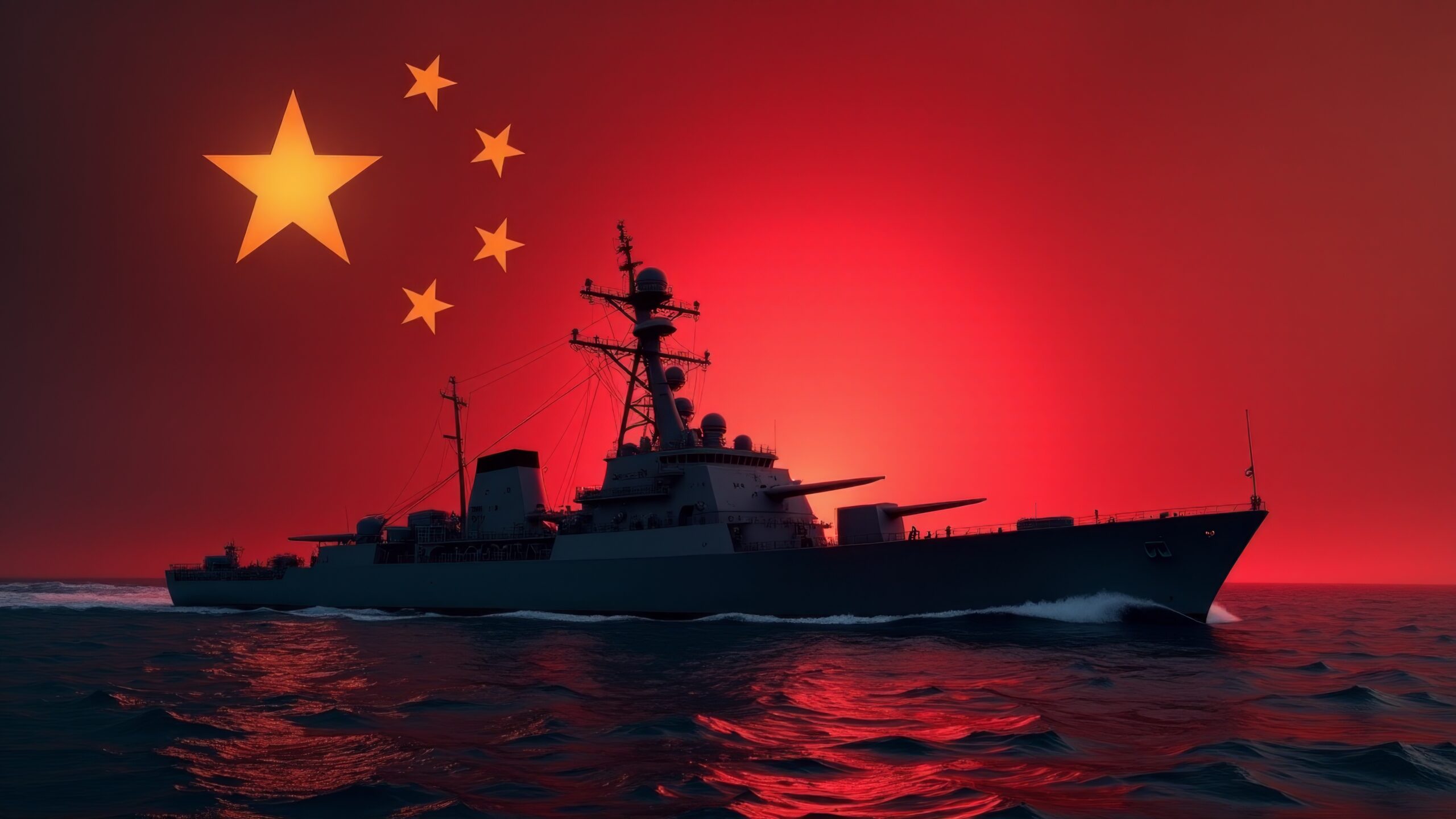
China’s revised National Defense Mobilization Law, taking effect October 1, gives the government broader legal authority to mobilize civilian resources during a conflict, Defense News reports. If national sovereignty, unity, territorial integrity, or development interests are threatened, the government can redirect economic and social resources toward national defense. The law could allow China to mobilize people, transportation, infrastructure, communications, technology, and private assets to support the People’s Liberation Army (PLA), including potentially requisitioning civilian vessels such as commercial fishing boats and maritime militia fleets for military use during a war or national emergency.
This legal framework is significant given China’s efforts to integrate civilian maritime capabilities with national security objectives. China has explored using its large civilian fleet for military purposes, including fishing vessels operating in coordinated formations and commercial container ships equipped with missile systems, radar, and defensive weapons. In conflict, civilian or militia-affiliated vessels could support transportation, logistics, reconnaissance, or mine-laying. Although their purpose and operational status remain uncertain, these dual-use capabilities could complicate naval operations by blurring the line between commercial and military assets.
Large numbers of civilian vessels can create congestion and navigation hazards during conflict, while fishing nets, lines, and other maritime debris can foul ship or submarine propellers and rudders and alter a vessel’s acoustic signature. On November 11, 2024, a Norwegian fisherman’s nets became tangled around the USS Virginia, a U.S. nuclear-powered submarine near Norway, dragging it about 2.3 miles before the Norwegian Coast Guard freed it; no one was hurt. The incident highlights how maritime hazards can affect naval propulsion and underwater noise, potentially influencing sonar detection and classification. Acoustic signature management is therefore an important consideration for naval forces operating around underwater sensing systems.
China has also maintained a significant naval-mine capability, with the PLA Navy (PLAN) conducting mine-laying exercises and developing mines incorporating different triggering mechanisms. China’s mine inventory has evolved from older moored mines to systems incorporating acoustic triggering. Naval mines can provide a relatively inexpensive means of restricting access to important waterways, making them a potential concern in a conflict involving Taiwan or other contested maritime areas.
Taken together, China’s mobilization law and its growing integration of civilian maritime resources provide a legal and organizational framework for drawing on the country’s enormous commercial and industrial capacity during a major crisis. The development has attracted attention from Taiwan, Japan, the Philippines, Australia, and the United States because of their potential involvement in regional contingencies. However, the law itself does not establish that China intends to initiate a war; rather, it provides mechanisms that could enable large-scale mobilization if Chinese authorities determined that a serious national-security emergency existed.