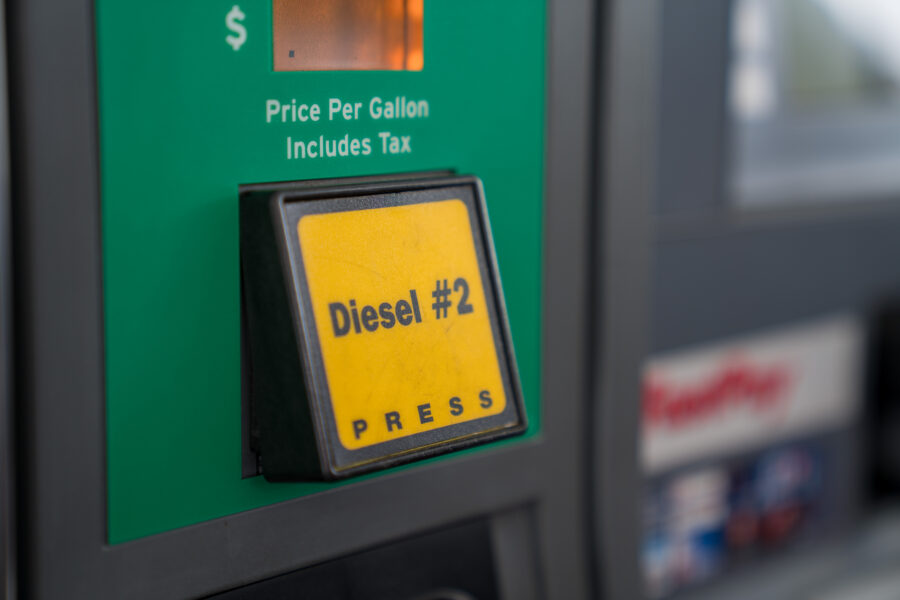
In the United States, the vast majority of passenger vehicles run on gasoline, but there’s a more important fuel that powers the vital pieces of the economy: diesel. It’s the fuel of life. Farming, transport, manufacturing, construction. These industries run on diesel fuel, and the price of that fuel is at or near all-time highs. Wyatte Grantham-Philips reported this morning for the Associated Press that diesel has hit all-time highs, writing:
Diesel hit a new record price in the U.S. on Friday, soaring to an average of $5.85 a gallon for the first time ever as the six-month war with Iran disrupts the world’s flow of fuel.
Because diesel is used for many freight and delivery networks, higher diesel prices mean higher transportation costs for a long list of everyday goods. More expensive fuel is increasing bills for businesses across sectors — some of which have already passed off costs to consumers in the form of added fees on online orders and packages in the mail. And shoppers may see more and more sticker shock trickle into store shelves.
You can see the trend of rising diesel prices in my chart below (the weekly chart includes only up to last Friday’s prices).
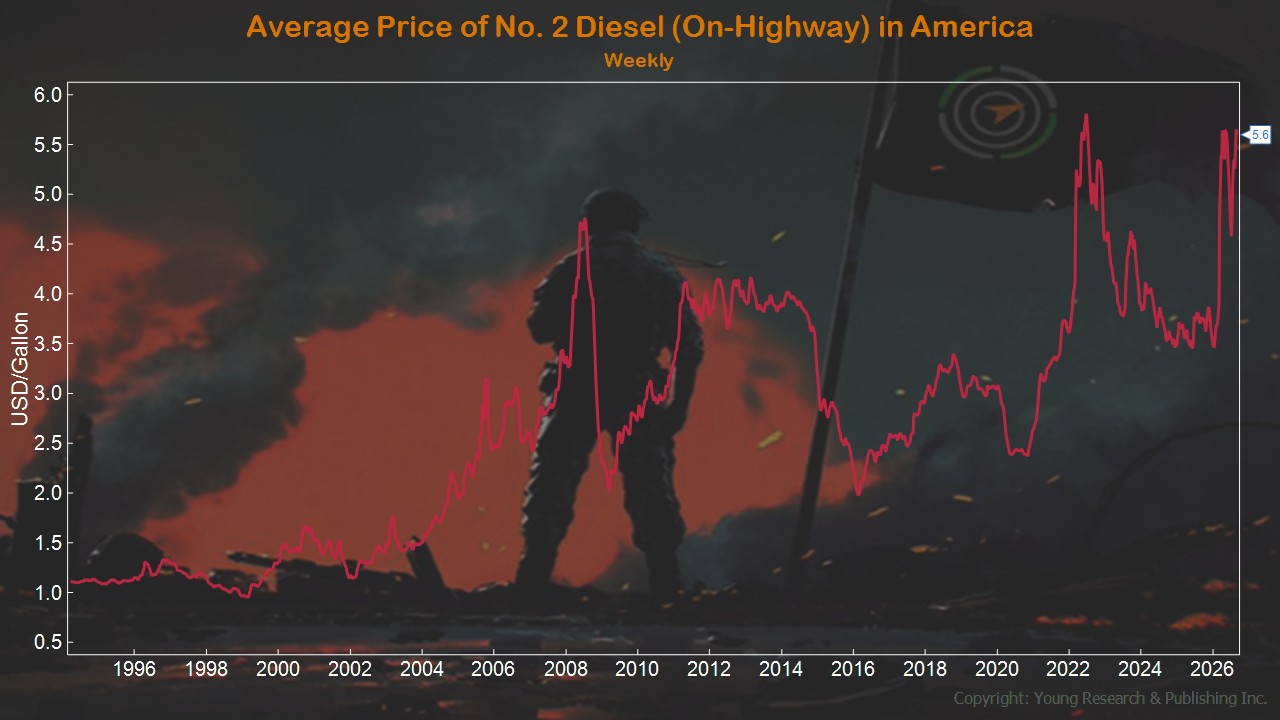
It’s easy to blame the high prices of diesel on the war in Iran, and certainly that’s part of the present spike in prices, but diesel prices have been rising for years for a number of reasons, some self-imposed and some mostly out of human control.
The self-imposed reasons are mostly due to regulations that have made diesel fuel more difficult to produce or more difficult to use. In 2006, the EPA created a set of mandates to force diesel engine users to buy ultra-low sulfur diesel (ULSD). That change alone added between 12.7 cents and 20.9 cents a gallon to the cost of diesel at the pump (based on an EIA study done after the implementation, with updated 2026 dollars). Somewhere around 2015, Europe, which had promoted diesel for decades, began a campaign of stricter policy against diesel that has drastically reduced its refining capacity.
Add those restrictions to diesel supply to broader global demand for diesel from countries like China and India, and the final wrinkle of the war in the Middle East, and you see why diesel prices are so high today.
Action Line: So what can you do? Prepare your retirement portfolio with shocks, disruptions, inflation, and other risks in mind. Pick a margin of safety appropriate for your risk tolerance. When you want to talk about a plan, email me at ejsmith@yoursurvivalguy.com. And click here to subscribe to my free monthly Survive & Thrive letter.
Originally posted on Your Survival Guy.