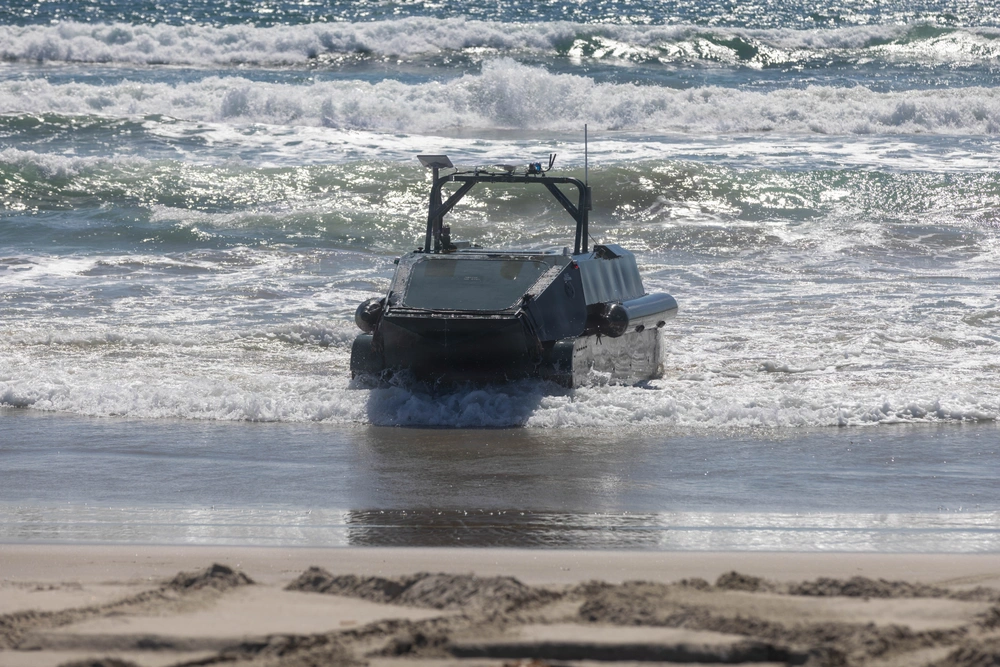
The War on the Rocks reports that future amphibious assaults are likely to begin with unmanned systems rather than human troops, as precision missiles and drones have made traditional beach landings far more dangerous. It suggests robotic boats and ground vehicles could secure initial beachheads before conventional forces move in, reducing casualties and political risk.

On July 13, 2026, Ukraine claimed it conducted the world’s first fully robotic amphibious assault. An unmanned naval drone delivered an armed ground robot onto Russian-occupied territory, where it carried out a combat mission without exposing soldiers to danger. The US Marine Corps is also pursuing a similar approach, recently testing its Unmanned Swarming Amphibious Craft (USAC) during Technical Concept Experiment 25.2, where the vehicle detected and marked beach mines before troops would land.
Together, these developments suggest the first waves of future amphibious warfare may increasingly be fought by robots, with human forces following to secure and hold territory.