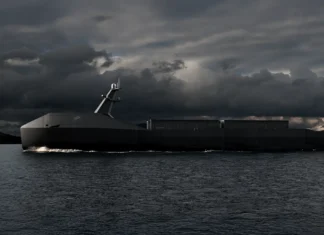
According to The War Zone, the USS Zumwalt (DDG-1000) is expected to return to the US Navy fleet in September 2026 after years of modernization. The major overhaul will transform the stealth destroyer into the Navy’s first surface warship capable of launching Conventional Prompt Strike (CPS) hypersonic missiles. The upgrade replaced the ship’s two unused 155mm Advanced Gun Systems with advanced missile launch modules, giving the Zumwalt a new long-range strike mission.
The ship’s return has been delayed by challenges involving its advanced hybrid-electric power system and other technical issues encountered during modernization. Despite these setbacks, the upgrade represents a major shift in the Zumwalt class’s role, moving the ships from their original land-attack mission toward a future as advanced hypersonic strike platforms. Once operational, USS Zumwalt will support the testing and fielding of the Navy’s next-generation hypersonic weapons capability.
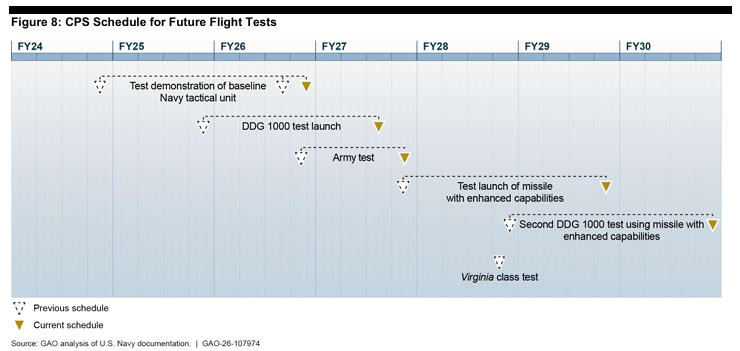
The Zumwalt modernization effort is part of a broader Department of Defense push to develop and deploy the Conventional Prompt Strike (CPS) hypersonic weapon. A new US Government Accountability Office (GAO) report found that the Pentagon lacks a unified strategy for managing the program, despite plans to invest more than $50 billion in Army and Navy hypersonic weapon development. GAO found that modernization of the Navy’s three Zumwalt-class destroyers is 24 months behind schedule, with flight testing delayed from 2025 to 2027 due to production, testing, and funding challenges.

Although the USS Zumwalt is expected to return as a hypersonic-capable destroyer, delays in Conventional Prompt Strike (CPS) missile production and testing could leave the ship initially without an operational missile supply. The program also faces high costs, with each missile expected to cost nearly $70 million and more than $40 billion for 224 missiles. The report also found that while the Army and Navy share responsibility for developing and producing the hypersonic weapon, they make major investment decisions independently, creating inefficiencies and delays.
GAO recommends that the Pentagon establish a comprehensive modernization strategy to better coordinate ship upgrades, production, testing, and funding. A more integrated approach could help accelerate hypersonic weapon deployment while improving the modernization of the Zumwalt class and future Navy platforms.