
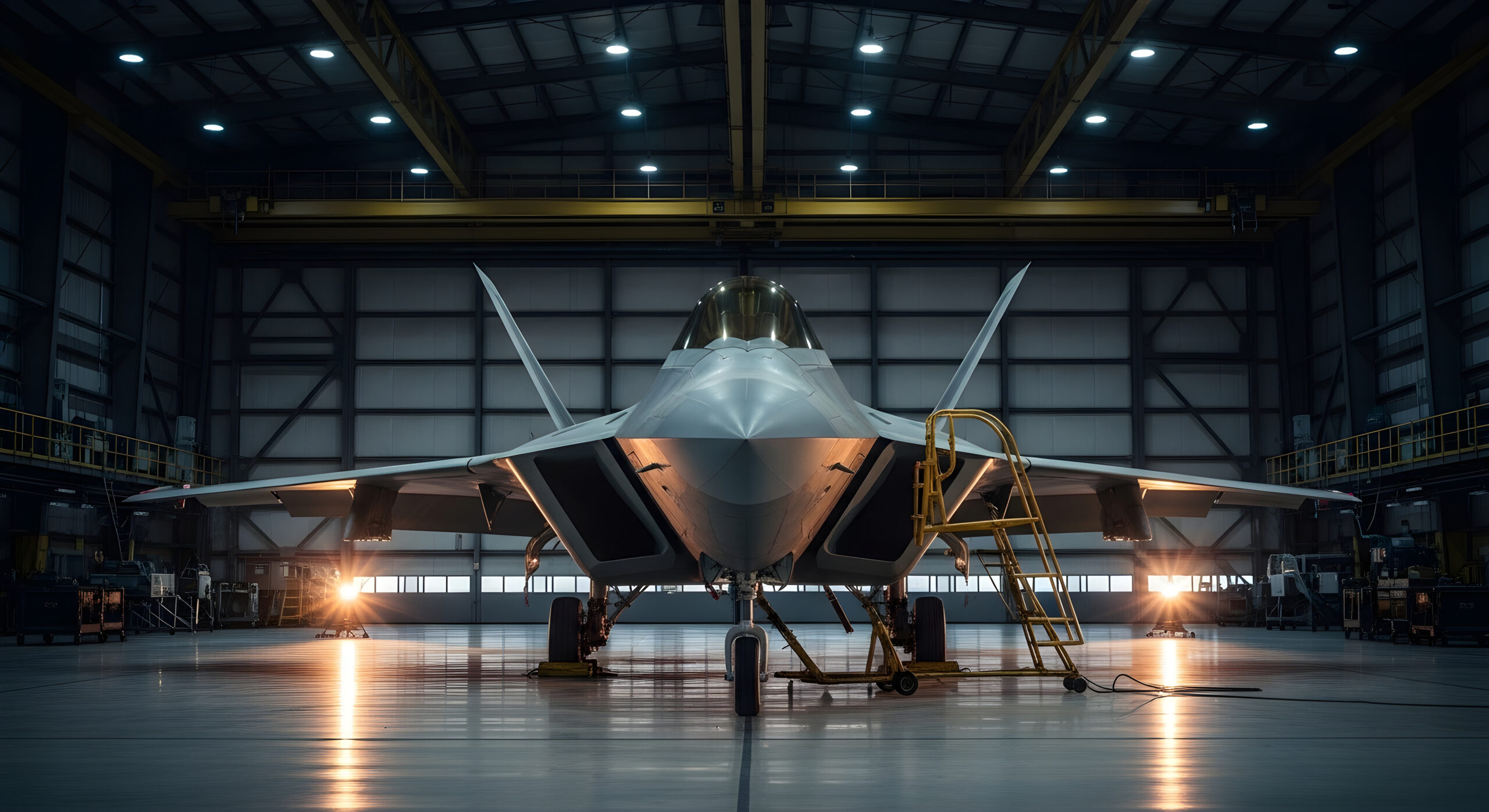
The US Air Force’s readiness crisis is being worsened by an overly rigid engineering culture that often grounds aircraft over minor technical deviations, even when maintainers judge the risk acceptable, reports Austin A. Gruber of War on the Rocks. With an aging fleet, slow modernization, supply-chain fragility, and mission-capable rates at historic lows, this strict engineering authority has become a bottleneck to generating combat power. The article argues that engineers should shift from final decision-makers to advisors, providing risk assessments while commanders make readiness decisions. Without embracing calculated risk and adapting processes, the Air Force may be unable to field sufficient aircraft in a future high-end fight. Gruber writes:
At sunrise in the Pacific, a fighter jet rolled to the end of the flight line as crew chiefs swarmed in final checks. Everything pointed to “ready.” Then a small crack was spotted — a hole that needed to be smoothed out. The maintainer sent a waiver request. Hours later: denied. The request was out of spec by a hair — imperceptible to the naked eye.
The jet never launched — not for lack of training, skill, or threat. It stayed grounded because an engineer — far removed from the fight — saw red ink. Where the maintainer’s judgment saw an acceptable risk, the engineer saw only a violation. This rigidity is the U.S. Air Force’s hidden chokepoint: A culture where combat readiness bends not to enemy pressure, but to engineering risk aversion.
In the U.S. Air Force, the engineering authority approves all technical decisions across a weapon system’s life cycle. Typically, each platform or program has a single chief engineer — the individual serving as the engineering authority — who has completed an extensive qualification pipeline and is hand-selected by a cadre of professionals. Because they are accountable — and legally liable — for the consequences of technical decisions, the vetting process is rigorous, and that burden of responsibility often drives a reluctance to accept risk. Engineers see no room for assumption. Their decisions are mathematical and they bear full accountability for miscalculation. […]
At the Air Force Association’s Air, Space & Cyber Conference on Sept. 22, Secretary of the Air Force Troy Meink admitted: “I knew there was a readiness challenge. I didn’t appreciate how significant that readiness challenge was.” The service is entering great-power competition with the smallest fleet in its history and readiness rates at historic lows. This year, the inventory is projected to fall below 5,000 aircraft. Only 62 percent are mission capable. That means nearly 1,900 planes are unable to fly their designed missions on any given day. […]
The fix is uncomfortable but essential: Engineers should advise, not decide. Commanders ought to reclaim readiness decisions because only they bear responsibility for the fight. Operational readiness demands decision space. The U.S. Air Force should shift from risk aversion to calculated risk. That does not mean compromising safety. It means balancing airworthiness with readiness.
The engineering authority should evolve into an engineering advisor. Advisors quantify how far out of limits a system is, outline risks, and provide failure probability estimates. Commanders, accountable for mission success, then weigh those risks against operational needs. Critics will argue that shifting authority risks safety and consistency. They are right to worry. But the greater danger is a force that cannot fly when it is needed most. The fix should be carefully designed: Engineers should remain the technical conscience of the force, but commanders need to own the readiness decision. […]
The U.S. Air Force cannot allow engineering rigidity to become the single point of failure in a future fight. Preserving airworthiness will always be non-negotiable, but so is readiness. The two are not mutually exclusive — but that balance ought to rest with leaders in the fight. Unless the system evolves from a culture of “no” to a culture of “calculated risk” — one that accepts alternative materials, fast-tracks approvals, and aligns replacement cycles with reality rather than original specifications — America’s air force may struggle to command the skies.
Read more here.


