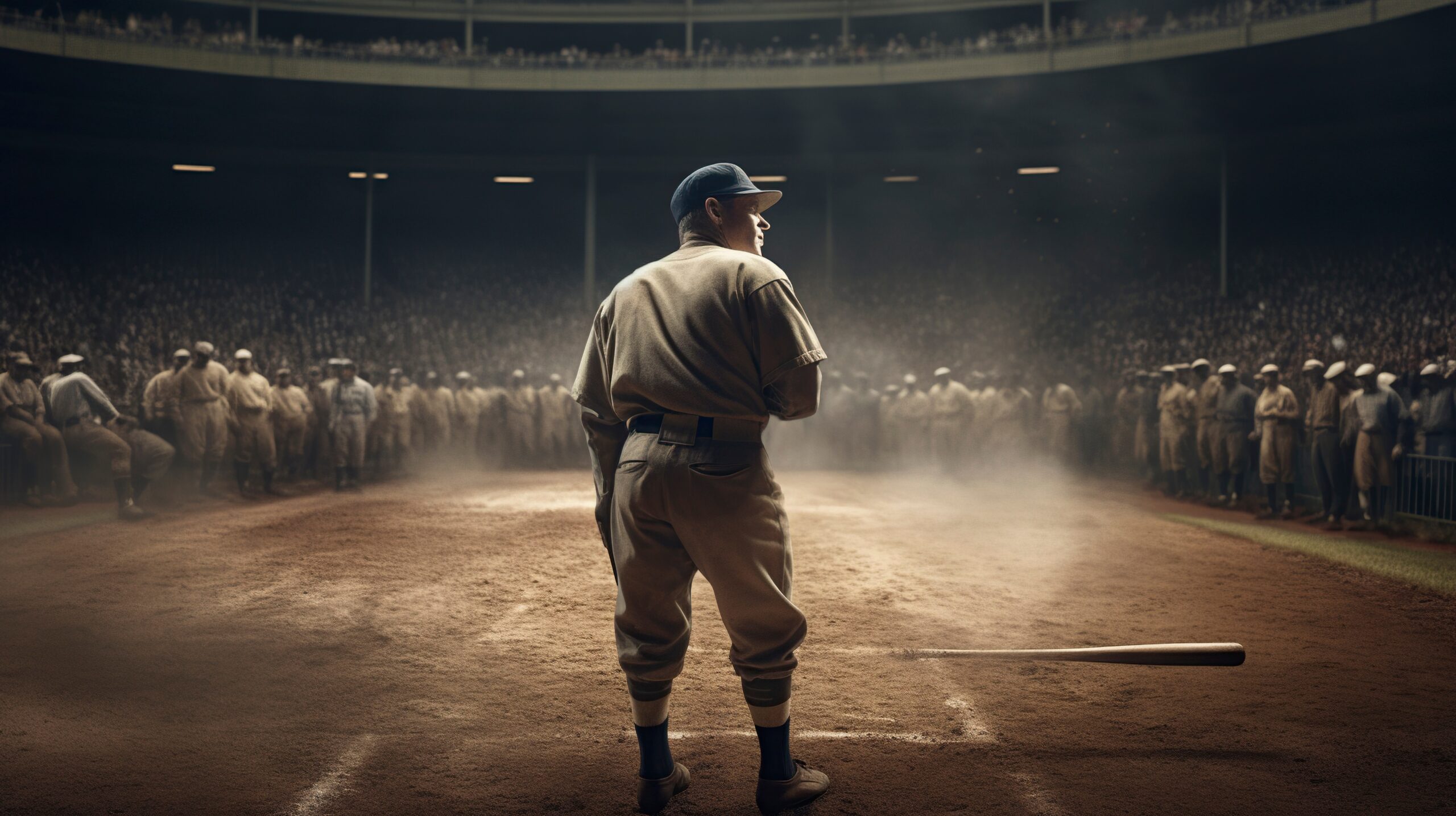
The quest for community will not be denied, for it springs from some of the powerful needs of human nature, for a clear sense of cultural purpose, membership, status, and continuity. Without these, no amount of mere material wealth will serve to arrest the developing sense of alienation in our society, and the mounting preoccupation with the imperatives of community. —Robert Nisbet, The Quest for Community, 1953.
In anticipation of Major League Baseball’s opening day, the Boston Red Sox posted a video. The video was captioned “Tomorrow,” a collection of clips from previous opening days at Boston’s Fenway Park—notably, from the 1950s.
“It was powerful. It was nostalgic,” writes Stephen Soukup in American Greatness, “And, as it turns out, it was extremely provocative.”
It is unlikely the intention of the organization was to spark a huge online conversation about what’s been lost in American society in the last couple of decades. One poster, for example posted that “Boston used to be such an amazing city; now it’s a dump” and that the video showed “a beautiful city and crowd. This world no longer exists; it was willfully destroyed,” and that “Mayor Michelle Wuhan and the Radical Left have done everything in their power to erase this version of the Once Beautiful City of Boston.”
Unavoidable, given today’s political tensions, there were commentators who turned their anger on politicians, near and past, blaming the destruction of this former version of America on mass immigration and related policy decisions and failures: “
Other politicians placed the blame for the destruction of the former version of America on mass immigration and its related policy decisions and failures. “Then in 1965. Democrats said you know what this country needs… 1 million Third World foreigners and their entire chain migration families to be made citizens every year!!!”
Stephen Souku empathizes with Boston commentators’ frustration and wistful melancholy. He wholeheartedly shares their loss.
The society shown in the video of opening day at Fenway Park truly no longer exists. And while it is irrefutable that much about society has improved over the last 70-plus years, the specific characteristics of the prior generation identified in the video are worth lamenting—the apparent calm, dignity, and solidity of the crowd that showed up to celebrate together and cheer on “their” team.
Mr. Souku has another view, however. He also thinks commentators misunderstood the nature of the losses that precipitated the loss that they feel. It’s bigger and weightier than “just the way things used to be.”
The commenters missed the broader social, cultural, and legal evolution that produced the loss and the near inevitability that their anger, disappointment, and feelings of alienation will grow worse and more profound over the next several years or longer.
What are we watching in the video that we find so difficult to pinpoint? It isn’t better run cities. It isn’t more wealth or more apparent affluence or even being better dressed. It certainly isn’t greater racial or cultural homogeneity.
Many of the things that appear in the video, and clearly were interpreted by some as the source of their nostalgia, but they are coincidental, writes Mr. Soukup. The source of grief stimulated by scenes of “the America that once was” is the loss of community.
The need for community is deeply embedded in man’s character, as suggests Robert Nisbet. We require it and crave it. It enables us to live in tranquility and contentment. How else will we be distinguished from the rest of God’s creations? “
Nisbet noted further that “community” is something larger, something different from mere geographical proximity. It “encompasses all forms of relationships that are characterized by a high degree of personal intimacy, emotional depth, moral commitment, social cohesion, and continuity in time.” In short, community provides stability, consistency, and predictability. It enables man to build a life and to know, with reasonable certainty, that the things that are important today will also be important tomorrow.”
Given this, continues Mr. Soukup, “the sense of loss triggered by the Fenway Park video isn’t about the collapse of Boston into a troubled, crime-ridden city—or at least it’s not just about that. Rather, it’s also about the collapse of the Red Sox and the collapse of baseball teams as a source of social cohesion and especially continuity in time.”
When the scenes from the video were filmed, baseball’s “reserve clause” was still in effect. This meant that the Red Sox (and all other major league clubs) owned the rights to the players they signed in perpetuity. Thanks in large part to the Supreme Court’s 1922 ruling in the case of Federal Baseball Club v. National League, baseball was ruled exempt from antitrust claims under the Sherman Act. It was considered an “amusement,” not interstate commerce, thereby giving it protected status. In other words, the Red Sox were legally, officially Boston’s team in more than name only.
The players, continues Soukup, “were, almost by definition, part of the city and part of its culture (as the Yankees’ players were of the Bronx, the Indians’ of Cleveland, and so on). Communities like Brooklyn, which lost the Dodgers to Los Angeles, suffered enormously when their baseball teams left, prompting children and even adults to write, speak, and mourn this “tragedy” for decades.
In 1970, Curt Flood challenged the reserve clause in court. Although he eventually lost his case, he nevertheless exposed the exploitation enabled by the clause and set the stage for its eventual removal. That removal came five years later, when arbitrator Peter Seitz effectively overruled the clause, leading to the negotiations that produced the free agent system.
Mr. Soukup clearly puts the blame on the institutions that exploited players for so long—MLB and the NCAA. If their leaders had had any foresight, he writes, “they would have handled things differently and could have preserved their respective communities.”
Now, it’s too late. In 50, 60, or 70 years, our kids and grandkids will watch videos of what it was like to camp out before games at Cameron Indoor Arena or Allen Fieldhouse, and they’ll lament that this world, too, no longer exists.