Why Working People Have Less Incentives
How strange it is that government benefits for nonworkers pays more than for workers. Keeping in mind progressives outraged about income inequality, Edward Ring in American Greatness discusses The Myth of American Inequity, Senator Phil Gramm’s book, in which the former senator evaluates U.S. household income by quintiles.
The bottom quintile, which is the lowest 20%, has income virtually equal to that of the second-lowest quintile (21-40%), when adjusting for the value of government benefits.
What Drives Inequity in America
In his book, Sen. Gramm considers only earned income.
Household earnings for the bottom quintile are discouragingly low, only $4,908 per year (2017 data). The second lowest jumps to $30,931, far higher, followed by the middle at $66,148, the second from the top at $112,563, and the top at $295,904.”
These are the numbers that stimulate outrage, provide fodder for the rhetoric of resentment, and are used to justify calls for redistribution. However, they hardly tell the whole story, continues Mr. Ring.
Adjusted for Government Benefits
Using data collected by the U.S. Census Bureau, Gramm shows how the value of government benefits and private charity, deducted from the value of federal, state, and local taxes, results in data decidedly different from taking the value of federal, state, and local taxes into account. Household earnings for the bottom quintile surged to $49,613 per year, only barely eclipsed by the second lowest at $53,924, with the middle quintile dipping slightly to $65,631, the second from the top falling to $88,132, and the top falling to $197,034.
Not satisfied with the above numbers, Gramm looked at the data on “average hours worked per week.”
The results were a reported 17.3 hours for the bottom quintile, compared to 32.0 hours for the next lowest. Working upwards, the next three were all between 36 and 38 hours.
The results showed that the lowest 20% is $55 per hour of work, whereas for the next group of “supposedly higher earners, the return is only $33 per hour of work.”
Sen. Gramm’s book, notes Ring, is a good place to begin for readers seeking to understand household income by quintile. Gramm doesn’t differentiate between people of working age versus seniors on fixed incomes that include Social Security and Medicare.
What isn’t clear, admits Mr. Ring, is if t the proportion of those two groups would differ significantly between the lowest and the next lowest quintile.
If seniors were more heavily represented in the second lowest quintile, which is quite likely, it would add more weight to his conclusion. This is because the higher the percentage of retired people in any quintile, the more working hours must be turned in by the people still working to achieve the reported average. Either way, the people we are conventionally reminded to regard as the most disadvantaged in the country are … doing as well or better than the working poor who occupy the next tier on the income ladder.
Gramm’s book, which acknowledges Ring, does a good job of defining evidence that inequality in America is misrepresented. He suggests that other factors should be weighted before jumping to conclusions regarding any alleged indolence on the part of America’s youth or those Americans who fulfill the stereotype of being inherently disadvantaged.
Question: Well, Mr. Ring, isn’t the cost of living a factor?
Ring:
The peak year of the so-called Baby Boom was 1946. In 1976, when these ’46 babies turned 30 and were starting families, the price of a home was $50,300, equivalent to $284,915 in 2025 dollars.
The peak year for Generation X births was 1970, and in 2000, when these ’70 babies turned 30 and were starting families, the price of a home was $212,100, equivalent to $396,979 in 2025.
Today, Mr. Ring continues, a 30-year-old born in 1995 can expect to pay on average $512,800 to own a home.
A recent analysis by economics blogger Nathan Halberstadt illustrates the consequences of the disproportionate rise in home prices.
In 1976, nearly half of all people over 30 in America were married and lived in a home they owned. Today, that percentage has fallen below 15%.
Halberstadt also compares data on the ratio of median home price to median household income. In his studies, Halberstadt doesn’t differentiate between those of working age versus seniors on fixed incomes (which include Social Security and Medicare).
Question: If that were done, Mr. Ring, would the proportion of those two groups differ significantly between the lowest and the next lowest quintile?
Ring:
If seniors were more heavily represented in the second lowest quintile, which is quite likely, it would add more weight to his conclusion. That is because the higher the percentage of retired people in any quintile, the more working hours must be turned in by the people still working to achieve the reported average.
Either way, the people we are conventionally reminded to regard as the most disadvantaged in the country are … doing as well or better than the working poor who occupy the next tier on the income ladder.
Question: Gramm’s book, as you say, does a good job of proving that inequity in America is misrepresented. Aren’t there other factors that need to be weighed before settling on a conclusion? How about indolence among the young? Or Americans who fulfill the stereotype of being inherently disadvantaged and strained with the cost of living?
Ring:
Baby boomers peaked in 1946. In 1976, when these ’46 babies turned 30 and were starting families, the price of a home was $50,300, equivalent to $284,915 in 2025 dollars.
The peak year for Generation X births was 1970, and in 2000, when these ’70 babies turned 30 and were starting families, the price of a home was $212,100, equivalent to $396,979 in 2025.
Today’s 30-year-old, born in 1995, on average, can expect to pay $512,800 to own a home. A recent analysis by economics blogger Nathan Halberstadt illustrates the consequences of the disproportionate rise in home prices.
According to Halberstadt, about half of all people over 30 in America in 1976 were married and lived in a home they owned. Today, that percentage has fallen below 15%.
Question: As you explain, the generational shift away from home affordability happened somewhere between late boomers (facing rising home prices and ridiculous interest rates) and early Generation X’ers (who saw home prices surge further even as interest rates declined). Are there specific reasons this happened
Ring:
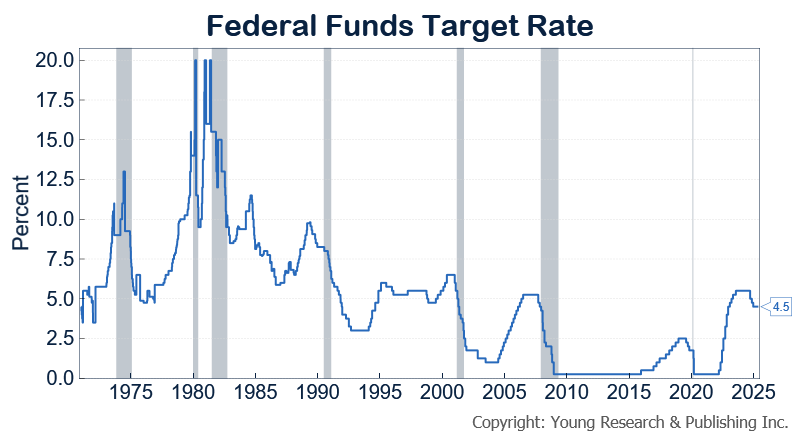
All these systemic disincentives are the result of political choices, and all the solutions to fix them are bipartisan. Don’t blame the older generations. Don’t blame interest rates, which are not that high by historical standards. Look to the underlying causes.
Mr. Ring gives solutions. His solutions will not be easy, he warns. They will require hard work.
- Shrink government headcount and shrink government services.
- Deregulate housing.
- Defund NGOs.
- End subsidies and make private sector contractors compete with each other, for example, to build homes.
- Stop illegal immigration and enforce reasonable restrictions on legal immigration.
- Get environmentalism right sized and refocused on genuine environmental challenges.
- Get hedge funds out of the housing market.
Americans are being pushed out of work. Ring warns.
It is a business model for government bureaucrats, NCOs and politically connected private sector contractors. Combine that with that Americans at almost all levels of income being locked out of a housing market that has been manipulated by environmentalist restrictions, unregulated immigration, and increasingly by trillion-dollar hedge funds that have discovered an appetite for single-family homes.
If you’re willing to fight for Main Street America, click here to sign up for the Richardcyoung.com free weekly email.