
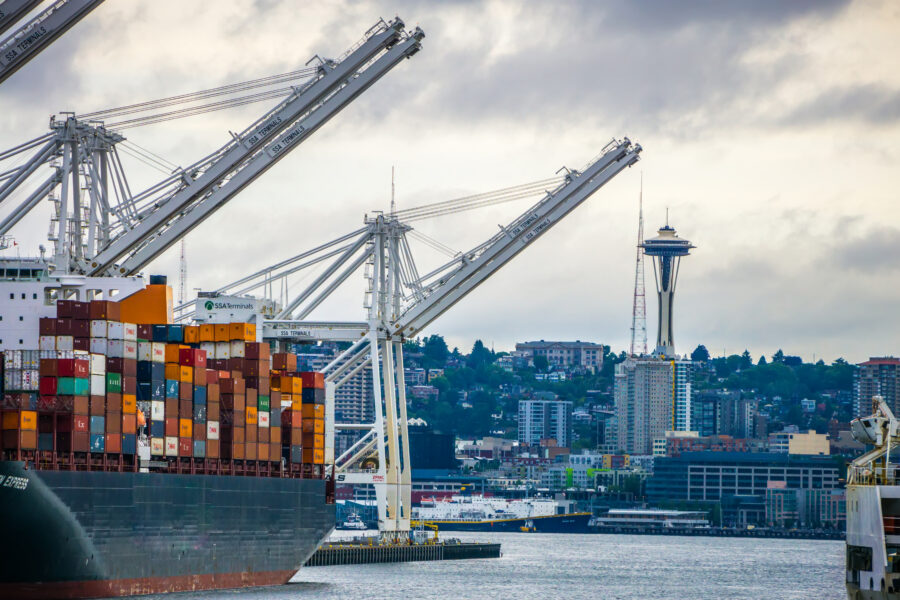
America has undergone a test of what might happen if it elimanted the Jones Act, a piece of archaic legislation that has strangled intra-state trade via the oceans, and the verdict is clear. The Jones Act should be buried forever in the bin of history. Colin Grabow explains for the Cato Institute:
The Trump administration has waived the Jones Act for the past 100 days, and something remarkable has happened. Long-dormant U.S. energy supply chains have come to life. Ships transported jet fuel from America’s East Coast to the West Coast for the first time in nearly two decades. Bulk propane shipments reached Puerto Rico from Texas and Pennsylvania for the first time ever. Hawaii bought gasoline from Texas, and Alaska imported jet fuel from Louisiana. Ohio shipped fuel across the Great Lakes to Wisconsin.
Such commerce should happen frequently in our vast, energy-rich country, but the Jones Act handicaps shipping. The law requires that goods transported between U.S. ports travel on American-built, American-flagged, American-owned and American-crewed vessels.
That makes domestic water shipping enormously expensive. U.S. vessels cost four to five times more to construct than foreign-built equivalents, and U.S.-flagged ships are over four times more expensive to operate. Compliant vessels are also in short supply. Of the world’s roughly 7,500 oil tankers, fewer than 60 are Jones Act-eligible. As a result, importing oil and fuel from halfway around the world is often cheaper than buying from domestic sources.
In mid-March, during the early weeks of the Iran war, the Trump administration suspended the Jones Act for ships transporting energy products and fertilizer. The move was a tacit acknowledgment of what economists and shippers have long known: The law imposes real costs on the American economy. The waiver initially expired after 60 days, but it was later extended for another 90, through Aug. 16. It constitutes something close to a controlled experiment in economic policy. And the results are striking.
I analyzed the shipping data since the waiver was enacted. In the roughly 90 days tracked, vessels operating under the waiver moved roughly 30 percent more oil and petroleum to the West Coast than Jones Act vessels move annually. More jet fuel shipped from the Gulf Coast to the West Coast than all recorded shipments between the regions in the last 27 years. In the waiver’s first 80 days, 49 percent more propane reached Puerto Rico from the mainland United States than over the past 22 years combined.
Read more here.


