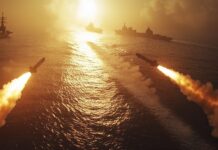
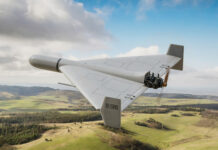
Maximilian K. Bremer and Kelly A. Grieco of War on the Rocks explains that Iran has been conducting a deliberate asymmetric counterair campaign against US airpower in the Gulf by using cheap drones and missiles to strike the critical support systems that enable American air operations — such as aerial refueling tankers, radar and communications networks, and airborne command platforms — rather than trying to achieve traditional air superiority with fighters.
The recent Iranian strikes, including damage to an E‑3 Sentry AWACS and multiple tankers at Prince Sultan Air Base, illustrate how Iran seeks to degrade US projection capabilities and force strategic dilemmas for forward deployments.
Bremmer and Kelly argue this campaign reflects a broader shift in air warfare that threatens fixed, high‑value assets and underscores the need for the US Air Force to rethink how it protects and sustains its forces in contested environments. They write:
On March 27, Iranian drones and missiles struck Prince Sultan Air Base in Saudi Arabia, destroying an E-3 Sentry, an airborne command center for U.S. operations in the region, and damaging multiple KC-135 tankers. It was not the first strike. Earlier in the month, an Iranian attack had already damaged five KC-135s at the same base. In the history of these aircraft, no enemy had ever achieved such a hit until Iran did both — within two weeks.
These strikes are the latest in a broader pattern, part of a deliberate counterair campaign waged through asymmetric means in the U.S.-Israeli war with Iran. Prior to the current two-week ceasefire, Iran systematically targeted the enablers that make American airpower so effective — radar and communications infrastructure, aerial refueling tankers, and now an Airborne Warning and Control System — across U.S. bases in Bahrain, Qatar, Kuwait, Saudi Arabia, and the United Arab Emirates.
Iran is the first adversary to execute a sustained asymmetric counterair campaign against U.S. forces, but it is unlikely to be the last. […]
The attacks are also a warning about air wars to come. Iran has exposed the fragility of the system that makes U.S. airpower possible: aging tankers parked out in the open, a handful of irreplaceable Airborne Warning and Control Systems, and radar networks at fixed positions visible to commercial satellites. These are structural vulnerabilities, and this is not an isolated episode. […]
Victory will go to those who anticipate how adversaries will exploit asymmetry — and act before the first strike lands.
Read more here.