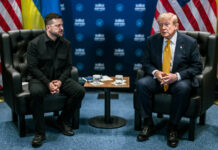
Francis Menton, at his “Manhattan Contrarian,” discusses Peggy Noonan’s claim that Trump is corrupt. Noonan begins her argument with, “Trump businesses have developed positions in industries over which the administration exercises power.”
The problem, according to Francis Menton, is government “exercises power” over every industry. Investors in essentially every industry view they are over-regulated by the government (less regulation would be an improvement in public policy). In almost every case, investors are right about that. So Trump deregulated the cryptocurrency industry and made money for himself off that. Independent of whether Trump made money personally on this, was deregulation of cryptocurrencies good public policy? Clearly, Trump thought it was.
According to Mr. Menton, the real question is not whether Trump is “corrupt,” but whether it is a good thing to have Presidents with interests in the private sector economy.
… the most recent Democratic Presidents — Clinton, Obama, Biden — have had no significant interests in the private sector economy, and indeed no real job in their lives other than “politician.” Is that preferable? To Menton, it is not.
Well then, continues Noonan,
Suppose a Republican president leaves office having established that a president can use regulatory powers against antagonistic institutions, exert pressures on companies needing government approval, and demand personal loyalty throughout the executive branch, all with no lasting repercussions. The next administration, disposed in other ideological directions, inherits the precedent’s.
Guess what? A president “can use regulatory powers against antagonistic institutions.” Furthermore, a president can exert pressures on companies needing government approval.”
At the time these powers were enacted, did anybody think that these things might be a problem? Did somebody really have the idea that the President and his subordinates were always going to be completely disinterested geniuses acting wholly in the public interest, with no personal or political motives of any kind? The whole idea is ridiculous. Ultimately, Noonan is not making an argument why Trump is corrupt, so much as she is making an argument in favor of more limited government. She just doesn’t recognize that, notes Menton.
Corrupt for a President to Demand Loyalty?
Mr. Menton recognizes employees (in an aspirational world) of the executive branch could have respectful disagreements with each other, leading to improvements in public policy. But then we find that in a world where loyalty to the President is not demanded from employees of the executive branch, we get people in the FBI and CIA cooking up the Russia collusion hoax, and initiating criminal investigations against the elected President on the flimsiest of grounds in the attempt to bring him down. Peggy Noonan thinks that trying to put a stop to this is corruption. It is not, confirms Menton. Unfortunately, we have learned that such a demand for loyalty is necessary for the government to be able to function at all, at least if a Republican gets elected.
Far worse, writes Francis Menton, back in the Clinton/Obama/Biden days, it was a different kind of corruption: passing out tens of billions of taxpayer dollars annually to Democrat-friendly institutions and NGOs, some percentage of which then gets kicked back as monetary or in-kind political contributions to keep Democrats in power. Mr. Menton thinks this is far worse, far larger type of corruption than Peggy Noonan attributes to Trump. Menton doesn’t recall Ms. Noonan writing about it at the time. And again in falls under the category of “politics is inherently corrupt,” rather than something that can be effectively criminalized.
Joe Biden specialized in taking millions from a corrupt Ukrainian business and in return using U.S. foreign aid as a lever to call off a prosecutor.
That was classic “quid pro quo” corruption, actually subject to criminal prosecution. See Menton’s tag “Bidens: Stone Cold Crooked.”
Francis Menton is not trying to stand up for everything Trump has done as completely free from corruption. “But again, politics is inherently corrupt.”
Overall, writes Menton, “I would far prefer a President with experience and interests in the private sector than someone without such experience or interests. If that means that the President can inherently benefit from some of his policy decisions, so be it.”
Start with Dodge
If we don’t like that, Menton’s best solution is to shrink the scope of the President’s responsibilities, as Trump attempted with “Dodge.”
The best way to reduce “corruption” is to shrink not only the scope of the President’s responsibilities, but the absolute scope and size of the overall government.