Ukraine’s new underwater drone, the Toloka TLK-1000, could pose a significant threat to Russian infrastructure, including the Crimean Bridge and Black Sea oil platforms, as first reported by Forbes. As the largest in Ukraine’s Toloka line, the TLK-1000 can carry up to 5 tons of payload, operate autonomously at long ranges and depths, and uses AI navigation. Ukraine’s strategy focuses on low-cost, mass-producible underwater systems, contrasting with the more expensive approaches of global powers. The deployment of such drones adds a new dimension to Black Sea warfare, increasing the threat to Russian ports and shipping. They write:
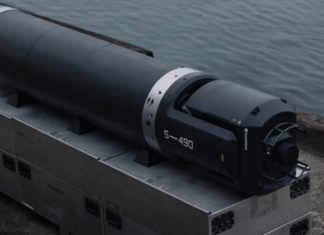
Ukraine has led the world in the development of combat drones, with small FPVs and larger bombers inflicting the majority of Russian losses. Ukrainian robot boats have scored some notable successes in the Black Sea, Now Ukraine is moving into the underwater domain with the unveiling of a giant new robot submarine at an exhibition in Lviv
The underwater drone has a five-ton payload and is designed for minelaying and the “destruction of large stationary targets.” This sounds like a direct threat to Russia’s Kerch Bridge. […]
The TK 1000, able to bring a charge almost five times as big, might finally be the bridge dropper that Ukraine needs. Russia has deployed a wide range of defensive measures both above and below the water and would hope to detect and counter an attack. But the fact that previous efforts got through suggests that another effort might succeed.
There are other targets too, not just bridges but platforms in the Black Sea, originally built for oil and gas but now used as radar and air defence bases. The Russian fleet is now largely confined to port, sheltering behind booms and other defenses to keep the robots boats out. A big enough explosive charge could be covertly placed to blast a way through for an attack either over or under the water. It could also act as a carrier for squadrons of FPVs or other aerial drones. […]
Ukraine, which sees drones more as low-cost expendable units, may lead the world in a new type of underwater warfare.
Read more here.