
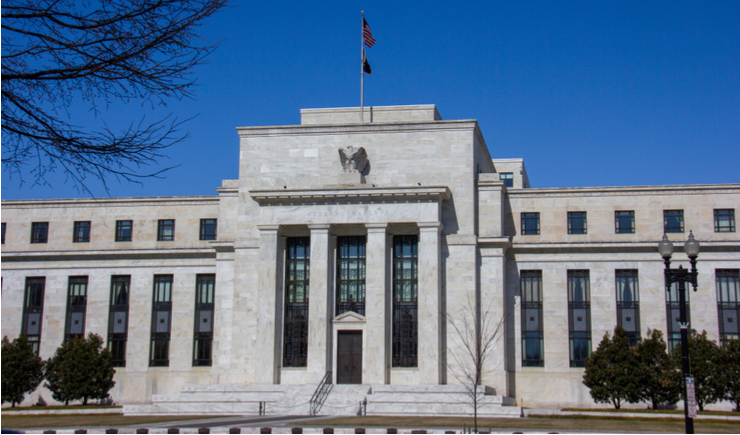
In a recent piece for Cato Institute, Research Associate Christian Kruse condemns President Trump’s efforts to exert executive branch control over the Federal Reserve, and suggests as a better option that the central bank abide by the Taylor Rule, or another monetary policy rate-setting rule, to set policy. He concludes:
The evidence is clear. To ensure the Fed’s independence and provide more clarity over its decisions, Congress should require the central bank to follow a monetary rule. By following a rule, the Fed can quell uncertainty over which direction interest rates will head, dodging the heat from the media and White House over its discretionary decisions. Maybe then the president would stop trying to fire Fed governors or meddle with monetary policy.
In 2009, George Selgin, a Senior Fellow at Cato at the time, supported the idea of ending the Fed, as was being demanded by presidential candidate Ron Paul at the time. Selgin wrote:
Since it was introduced in February, Representative Ron Paul’s “Audit the Fed” bill (H.R. 1207) has gained 282 congressional cosponsors. If adopted, the bill would allow the Government Accountability Office to review, not only the Federal Reserve’s balance sheet, but its recent monetary policy deliberations and transactions.
Fed Chairman Ben Bernanke opposes the plan, saying it would undermine the Fed’s hallowed independence.
But Mr. Paul, a noted libertarian who ran for president last year, also wants to keep the Fed out of Congress’s clutches – by scrapping it altogether. That’s the goal of his follow-up Federal Reserve Board Abolition Act (H.R. 833). Although that measure has yet to gain a single cosponsor, it has plenty of grass-roots support, and Paul hopes that members of Congress will jump on the bandwagon once their eyes are opened by a no-holds-barred audit.
Wacky stuff? Well, if not having a ghost of a chance is enough to make a bill bonkers, Paul’s measure probably qualifies. But that doesn’t mean you’ve got to be crazy to believe that the US economy would be better off without the Fed.
He concludes:
So a call to end the Fed would have been anything but crazy in 1934. Three-quarters of a century and a dozen crises later, there are plenty of grounds for insisting that it hasn’t gotten any crazier.
Read more from Selgin here.
Read more about ending the Fed here:


