

Ben Franklin famously told Jean-Baptiste Le Roy in 1789 that “in this world nothing can be said to be certain, except death and taxes.” And for electric vehicle owners, they are learning that there is no escape.
You may think that not needing to purchase fuel for their vehicles would allow EV owners to avoid fuel taxes. In many states, they are paying a number of taxes on electricity delivery. Many politicians describe fossil fuel taxes as an incentive for drivers to use less fuel. Taking their cue from these politicians, EV owners have done just that, but rather than be rewarded for their choices, politicians who miss the revenue are finding new ways to punish them.
The Tax Foundation’s 2026 analysis examines how states tax and incentivize electric vehicles. Because EV drivers generally do not pay gasoline taxes, which help fund transportation infrastructure, states have increasingly turned to special EV registration fees and other charges to make up the difference.
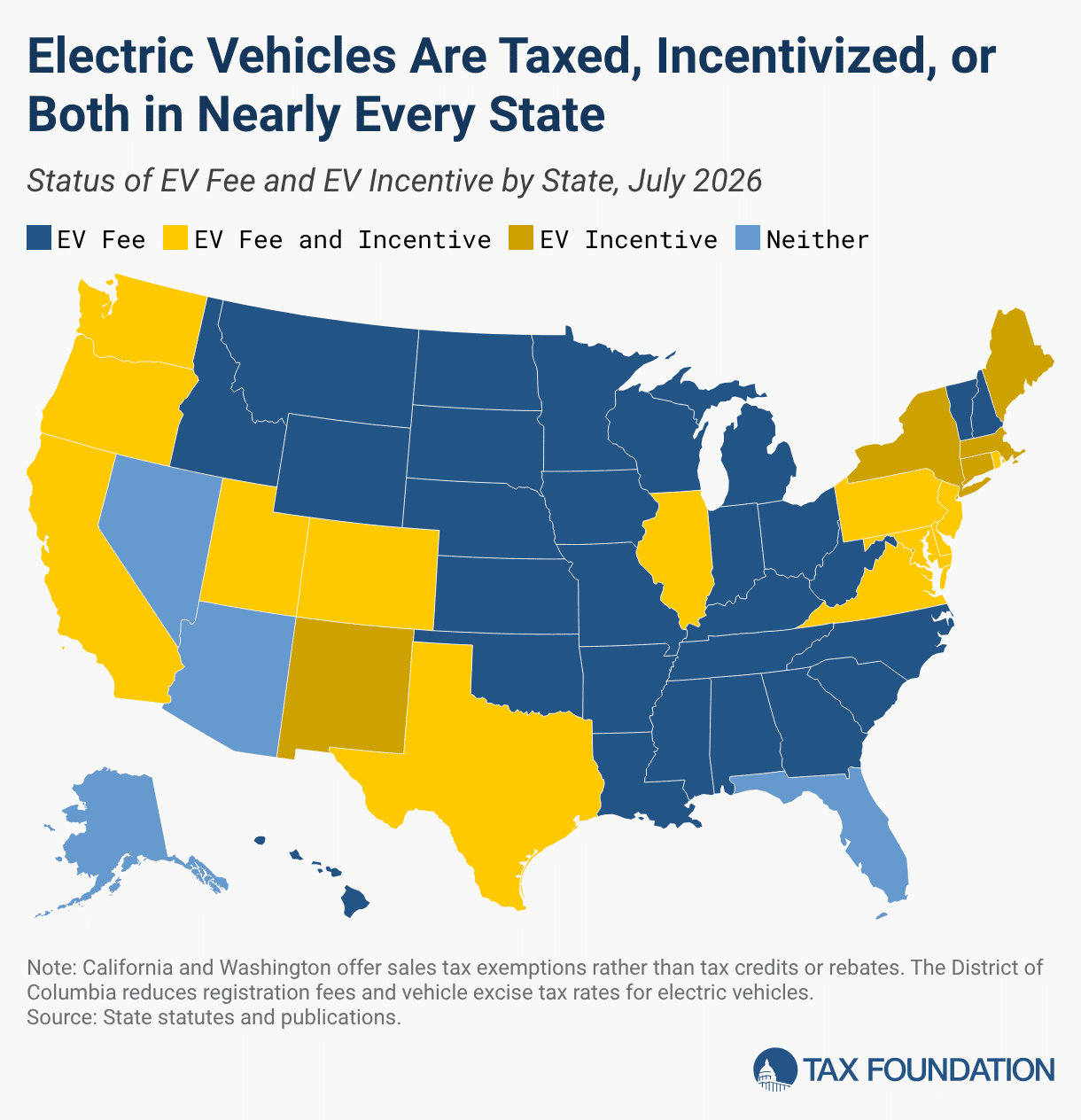
As of July 2026, 41 states impose additional fees on electric vehicles, ranging from $50 in Hawaii to $270 in New Jersey. Fourteen states recently increased their EV fees, while several others adjusted them for inflation. At the same time, 15 states continue to offer EV purchase incentives, ranging from $500 in New York to as much as $8,000 in Maine.
The report notes that some states are pursuing both incentives and additional fees, creating a mixed tax treatment for EV owners. It also highlights alternatives such as taxes on electricity used for charging and vehicle-miles-traveled (VMT) fees, which the Tax Foundation argues could more directly link transportation taxes to actual road usage.
Major 2026 changes include higher EV fees in several states, a new fee in Delaware, an increased rebate in Rhode Island, and the end of EV tax-credit programs in Oklahoma and Vermont. The report also says many state incentive programs have exhausted their available funding.


