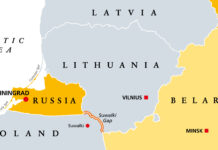
The 2026 National Threat Assessment offers an unclassified overview of the key risks to Lithuania’s national security, based on intelligence collected through early 2026.
It examines a spectrum of threats, including conventional military forces along NATO’s borders, as well as hybrid and cyber operations that could impact critical infrastructure, national sovereignty, and societal stability.
The report also identifies long-term trends and evaluates the likelihood of different scenarios over the next decade, providing guidance for Lithuania’s defense planning, preparedness, and counterintelligence measures in a rapidly evolving security landscape.
Top Security Risks Facing Lithuania in 2026:
Military Threats
-
Russia and Belarus continue to expand conventional forces near NATO’s eastern flank.
-
Kaliningrad and Belarus are heavily militarized, capable of rapid force projection.
-
Potential for limited aggression against NATO countries within 1–2 years if political conditions allow.
-
Long-term risk of broader conflict in 6–10 years without sustained deterrence.
Hybrid Threats
-
Disinformation campaigns targeting society and government institutions.
-
Attempts to undermine public trust, election integrity, and social cohesion.
-
Use of covert influence, economic pressure, and paramilitary groups.
Cyber Threats
-
Attacks on critical infrastructure, including energy grids, transport, and communications.
-
State-backed cyber operations are increasingly sophisticated, persistent, and automated.
-
Threat to financial systems and emergency response networks.
Economic & Energy Vulnerabilities
-
Dependence on foreign energy imports, particularly from Russia, increases leverage.
-
Supply chain disruptions could affect critical goods, medical supplies, and food security.
Strategic Recommendations
-
Strengthen NATO deterrence posture on the eastern flank.
-
Expand civil defense, crisis management, and cyber resilience.
-
Maintain continuous intelligence collection and early warning for hybrid and conventional threats.
-
Foster public awareness campaigns to counter disinformation and societal manipulation.
Emerging Threat Trends
-
Growing use of autonomous and unmanned systems in regional conflicts.
-
Increase in long-range precision weapons (missiles, drones) near the Baltic region.
-
Hybrid warfare and cyber-physical attacks are expected to become more integrated.