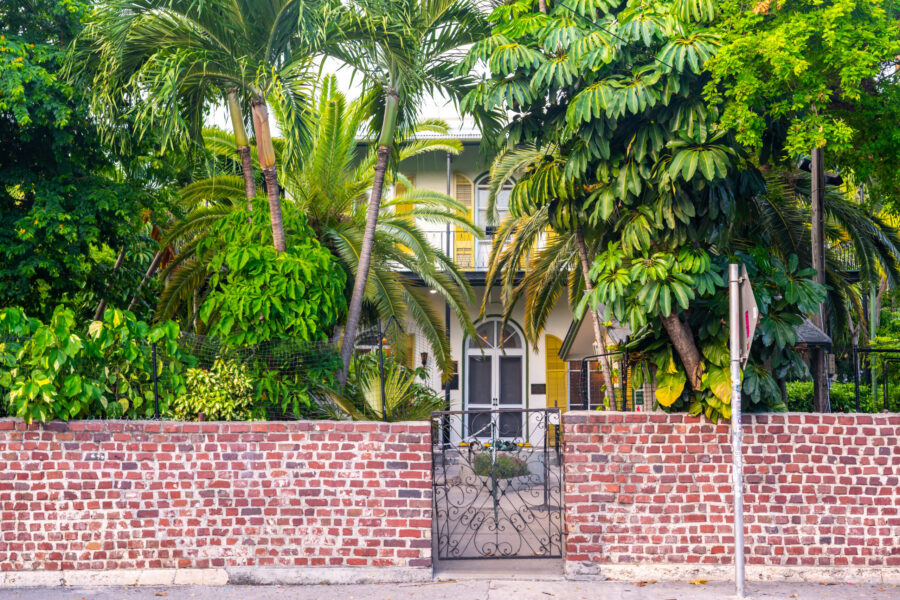
The arrival of Earnest Hemingway in Key West set off a cascade of additional moves by writers like Robert Frost, Tennessee Williams, and others to the city. Now, after being home to many famous writers, the city is losing its reputation as a “drinking town with a writing problem.” Authors like Judy Blume and Meg Cabot (who don’t really belong in the same universe as Hemingway, but alas) are attempting, with city officials, to reinvigorate Key West’s writing scene. Dorie Chevlen of The New York Times reports:
Ms. Cabot bought her house over 20 years ago, after publishing the first five installments of her “Princess Diaries” series. “It was pretty ridiculous then,” she said. “Now it’s ridiculous.”
Unlike in the past, “unfortunately, you have to be a successful writer to buy,” said Lynn Kaufelt, a local real estate agent and the author of “Key West Writers and Their Houses.” “You can’t be a struggling writer like we were when we first came.”
Driving up housing costs is the city’s statistically high percentage of nonpermanent residents. Tourism is the largest share of the island’s industry with over 30 percent of Key West residents working in hospitality, and roughly 15 percent of housing units are categorized as seasonal homes or vacation rentals, according to Census Bureau Data. That percentage is higher now than in the past, though it’s not a new phenomenon: Most of the 20th-century writers mentioned above (Frost, Dos Passos, Stevens) were seasonal residents, as were Truman Capote, Shel Silverstein and Ralph Ellison.
Confronted with steadily rising real estate costs, local nonprofits are working to keep parts of the island carved out for artists. In 2018, the nonprofit Studios at Key West bought and renovated an 1880s-era inn to be used for its ongoing residency program, the Peyton Evans Artist Residency. Now called the PEAR House, the space can accommodate four artists and writers at a time. “Florida’s not necessarily known for planning,” said Jed Dodds, the executive director of the nonprofit. “So we want to make sure that Key West doesn’t wake up one morning and have paved over that part of its soul.”
Each resident spends just one month in the PEAR House, but many of them return, sometimes on book tour, sometimes to stage a play. “Not that it’s easy anywhere to make a living as an artist, but it’s particularly hard here,” said Mr. Dodds. “It’s our job to support them however we can.”
Read more here.