The Pentagon and Lockheed Martin have agreed to a handshake deal for the latest two lots of F-35 airframes, and based on cost projections the program for the first time is targeting a unit price under $100 million, excluding engines and retrofits.
Read more here.
The F-35 was designed to dominate the skies and battlespace. The plane combines stealth, agility, advanced avionics and strike capabilities to make it the most effective multirole fighter aircraft in the world.
The F-35 excels in air-to-surface and air-to-air combat missions. Depending on the variant, the F-35 can carry a weapons payload of 15,000 or 18,000 pounds. Weapons include guided bombs, air-to-air missiles and a 25mm internal cannon on the F-35A variant. All variants include advanced avionics and integrated sensors, which give pilots 360 degree situational awareness of enemy threats.
The F-35 can operate around the clock, in any threat environment. Ultimately, the F-35 possesses a significant advantage over any adversarial aircraft.
The single-engine F-35 Lightning II will be manufactured in three variants:
F-35A Conventional takeoff and landing (CTOL) for the U.S. Air Force – The conventional takeoff and landing (CTOL) F-35A – designed for the U.S. Air Force – is the primary export version of the Lightning II. The F-35A uses standard runways for takeoffs and landings. Internal fuel capacity is nine tons, providing an unrefueled range of more than 1,200 miles without external tanks. The F-35A carries a 25 mm GAU-22/A cannon internally. The standard internal weapons load is two AIM-120C air-to-air missiles and two 2,000-pound GBU-31 JDAM guided bombs. Optional internal loads include eight GBU-38 small-diameter bombs, as well as a wide variety of air-to-ground missiles, dispensers and guided weapons. The internal weapons bay is reconfigurable for all air-to-ground ordnance, all air-to-air ordnance or a blend of both. When stealth is no longer required to execute a mission, the F-35A external pylons are loaded with ordnance, giving the aircraft a weapons payload of more than 18,000 pounds.
F-35B Short takeoff/vertical landing (STOVL) for the U.S. Marine Corps and the U.K. Royal Air Force and Royal Navy – The F-35B is the first aircraft in history to combine stealth with short takeoff/vertical landing capability and supersonic speed. This distinction gives the F-35B the unique ability to operate from small ships, roads and austere bases. The F-35B deploys near front-line combat zones, dramatically shrinking the distance from base to target, increasing sortie rates and decreasing the need for logistics support. Internal fuel capacity is seven tons, providing an unrefueled range of more than 900 miles without external tanks. The F-35B standard weapons load is two AIM-120C air-to-air missiles and two 1,000-pound GBU-32 JDAM guided bombs. Optional internal loads include six GBU-38 small-diameter bombs, as well as a wide variety of air-to-ground missiles, dispensers and guided weapons. The internal weapons bay is reconfigurable for all air-to-ground ordnance, all air-to-air ordnance or a blend of both. A missionized version of the 25 mm GAU-22A cannon is installed or removed as needed. When stealth is not required to execute a mission, the F-35B external pylons are loaded with ordnance, giving the aircraft a weapons payload of more than 15,000 pounds. Primary customers will be the U.S. Marine Corps, the United Kingdom’s Royal Air Force and Royal Navy, and the Italian Navy. See the F-35B’s 1st landing on the USS WASP.
F-35C Carrier variant (CV) for the U.S. Navy – The U.S. Navy’s first-ever stealth aircraft operates from the service’s large carriers via catapult launch and arrested recovery. Larger wings and control surfaces and the addition of wingtip ailerons allow the F-35C pilot to control the airplane with precision during carrier approaches. The aircraft incorporates larger landing gear and a stronger internal structure to withstand the forces of carrier launches and recoveries. Ruggedized exterior materials mean low maintenance requirements for preserving the aircraft’s Very Low Observable radar signature, even in harsh shipboard conditions. F-35C internal fuel capacity is nearly 10 tons, providing an unrefueled range of well over 1,200 miles without external tanks. The standard internal weapons load is two AIM-120C air-to-air missiles and two 2,000-pound GBU-31 JDAM guided bombs. Optional internal loads include eight GBU-38 small-diameter bombs, as well as a wide variety of air-to-ground missiles, dispensers and guided weapons. The internal weapons bay is reconfigurable for all air-to-ground ordnance, all air-to-air ordnance or a blend of both. A missionized version of the 25 mm GAU-22A cannon is installed or removed as needed. When stealth is not required to execute a mission, the F-35C external pylons are loaded with ordnance, giving the aircraft a weapons payload of more than 18,000 pounds.
Pilot Awareness
The F-35’s survivability begins with pilot safety and awareness. The aircraft’s mission systems provide the pilot with 360 degree situational awareness. Six electro-optical sensors warn pilots of incoming aircraft, ground fire, and missile threats.
A helmet-mounted display system helps the pilot detect opportunities and threats that surround him. The helmet visor has an integrated, virtual head-up display, targeting information, look-shoot capability and video/night vision projected onto the helmet visor.
Stealth
The F-35’s very low-observable (VLO) stealth enables pilots to see enemies before being seen—even during daylight. Stealth features—including shape, materials and internal weapons—are unique to 5th generation aircraft and cannot be retrofitted to legacy planes or enemy aircraft. Stealth enables the F-35 to attack before it is attacked.
Defensive Performance
The F-35’s speed, acceleration and agility enable the aircraft to evade enemy threats and penetrate highly hostile environments. Networked communications also provide information from satellites, ground forces and other aircraft to enhance F-35 survivability and interoperability.
No matter how advanced an aircraft, it is only effective when it is in the air, flying its mission. The F-35 platform—the aircraft itself as well as the logistics and sustainment support systems—was designed to keep each plane in the air and fully operational. The platform’s sustainability features include:
Advanced Monitoring, Maintenance and Prognostics
To ensure near-continuous mission availability, each F-35, as well as the fleet as a whole, is monitored and measured against a host of parameters. Maintenance needs can be anticipated and met before performance degrades, and unnecessary flight line activity is minimized.
Streamlined Service Operations
Onboard sensors detect systems in need of maintenance—and report back this information while the F-35 is still in flight. Maintainers can procure parts, review procedures and be ready to service the aircraft as soon as it returns to its base or carrier.
Autonomic Logistics Information System
The Autonomic Logistics Information System (ALIS) is the infrastructure for maintenance data collection, data analysis and decision support. It ties together F-35 operational planning, prognostics and health management to enhance the worldwide fleet. ALIS reduces logistic delay times by automatically generating appropriate actions with notice to system managers, just as the human nervous system operates the body with unconscious control by the brain.
Global Logistics
The F-35 fleet will be managed on a worldwide basis, with comprehensive information collection, data analysis and action tracking. This secure global information system will serve as the foundation of streamlined fleet sustainment, resulting in F-35 parts, systems and expertise reaching any location when they’re needed. The Global Logistics System brings information fusion to the many individual logistics components to enable system optimization.
Rising Cost
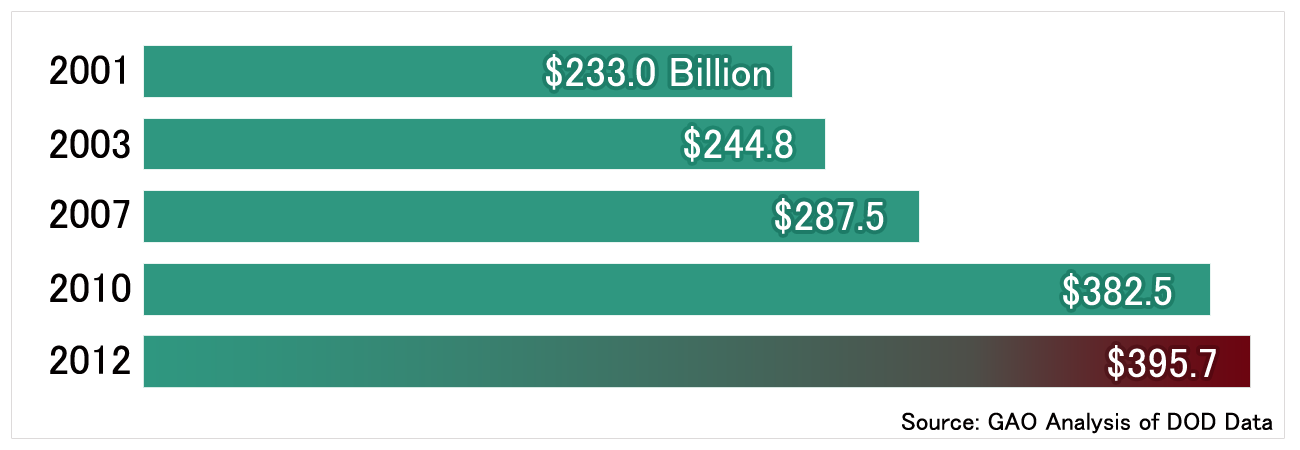
The cost of developing and building the F-35 Joint Strike Fighter rose 4.3 percent to $395.7 billion last year and the plane will not reach full-rate production until 2019, two years later than planned.
Recent News: Latest F-35 Deal Targets Unit Cost Below $100 Million – July 30th, 2013
USAF Accepts Limited Capability With 2016 F-35 IOC – May 31, 2013
First F-35B Vertical Takeoff Test – May 10, 2013
F-35B Flights Suspended Following Fueldraulic Failure – January 18, 2013
Lockheed’s F-35 Falls Short of Testinig Goals in 2012 – January 14, 2013
Report: Lightning a threat to the F-35 – January 14, 2013
Costliest Jet, Years in Making, Sees the Enemy: Budget Cuts – November 28, 2012
Better Cost Estimates Needed for Extending the Service Life of Selected F-16s and F/A-18s – November 15, 2012